Okay so the old money capsule wardrobe has been all over my Pinterest and Instagram for like two years now and I know what you’re thinking — is this still a thing or did I miss it?
Still a thing. And honestly I think it’s because it was never really a trend to begin with.
It’s more like… a way of dressing that makes sense. You stop buying random stuff and start building something that actually works together.
I’ve been slowly putting this wardrobe together and the difference it’s made in how I get dressed every morning is kind of ridiculous.
No logos. No pieces that scream “I saw this on TikTok.” Just things that look good, fit well, and somehow make every outfit feel like you thought about it — even when you didn’t.
What Old Money Actually Means
Okay real talk — when I first got into the old money aesthetic I thought it just meant buying beige things and looking rich.
It’s not that. You can spend a fortune and completely miss the point. The whole thing is more about what you’re not doing. No logos, no trend pieces that’ll look dated in eight months, no outfit that’s trying to tell everyone how much you spent.
Old money style is quieter than that — it’s closer to what people call quiet luxury. Understated, intentional, nothing screaming for attention.
Just clothes that fit well, feel good, and don’t require explanation. Timeless pieces over trendy ones. Quality over quantity. Cream, navy, camel, black, white. Natural fabrics when you can. That’s basically it.
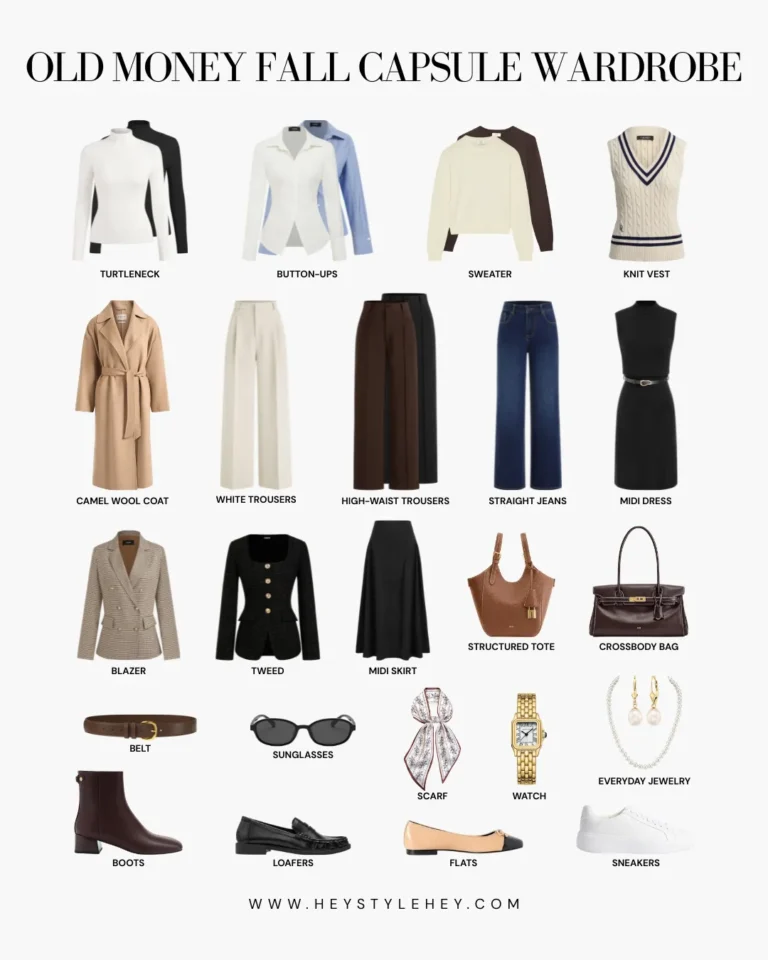
Old Money Capsule Wardrobe Essentials
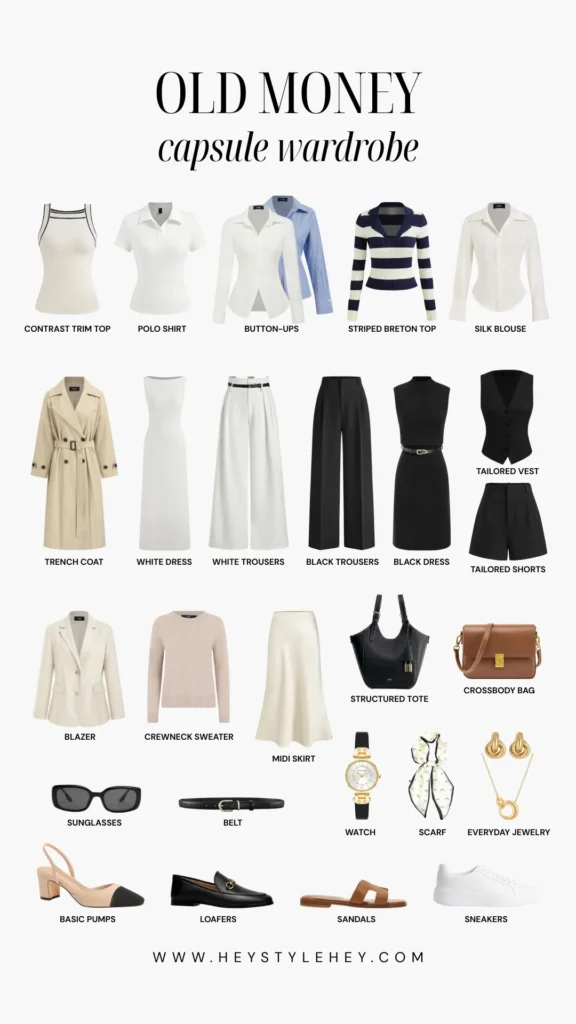
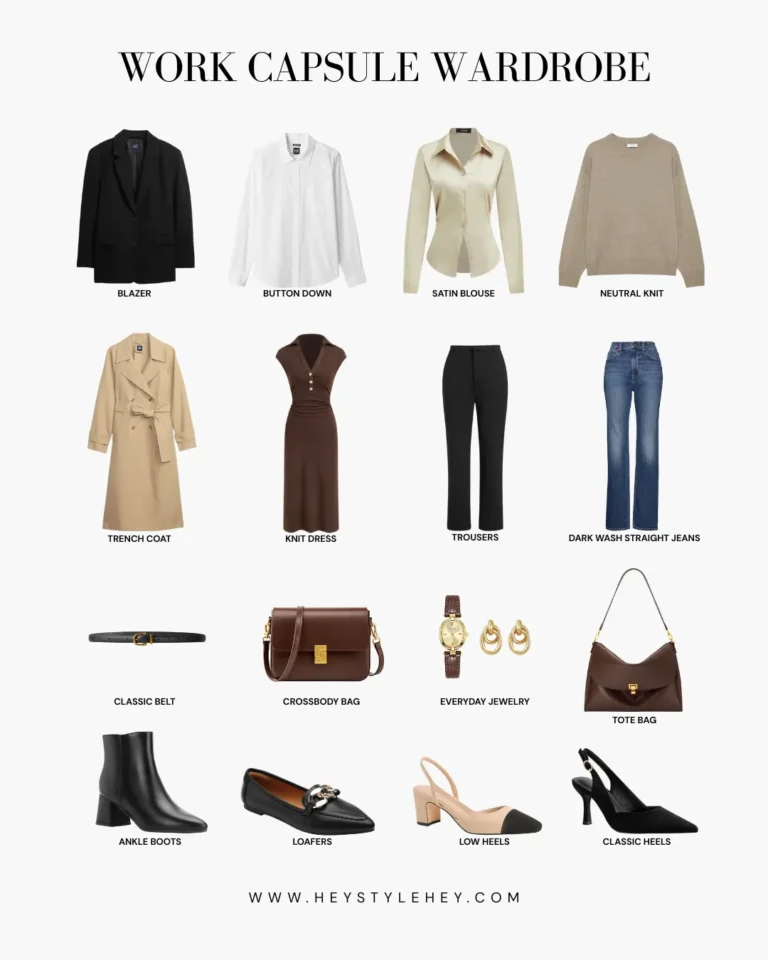
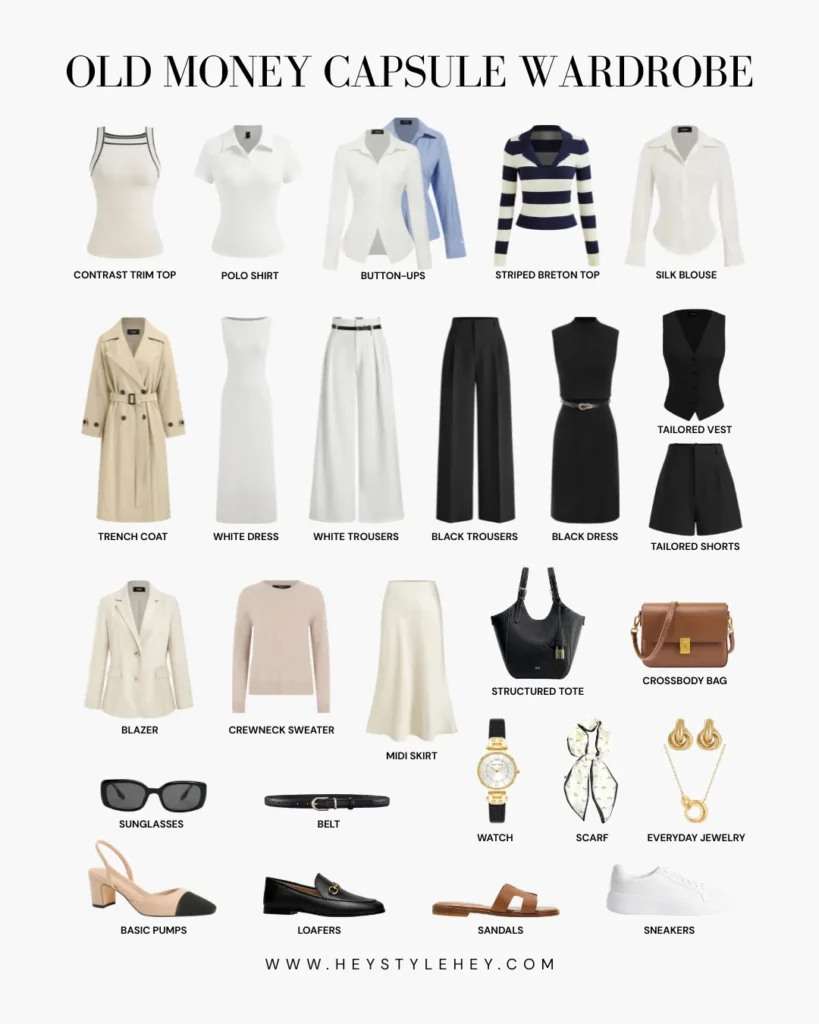
contrast trip top | polo shirt | button-up | striped breton top | silk blouse
trench coat | white dress | white trousers | black trousers | black dress | tailored vest | tailored shorts
blazer | crewneck sweater | midi skirt
structured tote | crossbody bag | sunglasses | belt | watch | scarf | earrings | necklace
basic pumps | loafers | sandals | sneakers
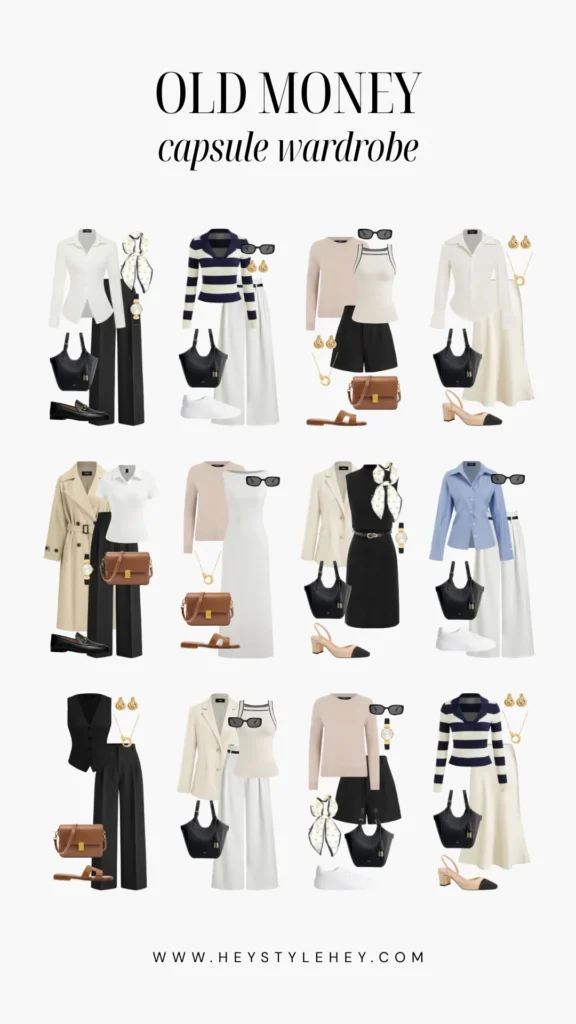
Here’s everything I put together for this wardrobe — the 15 core pieces and everything I styled them with.
01. White Shirt
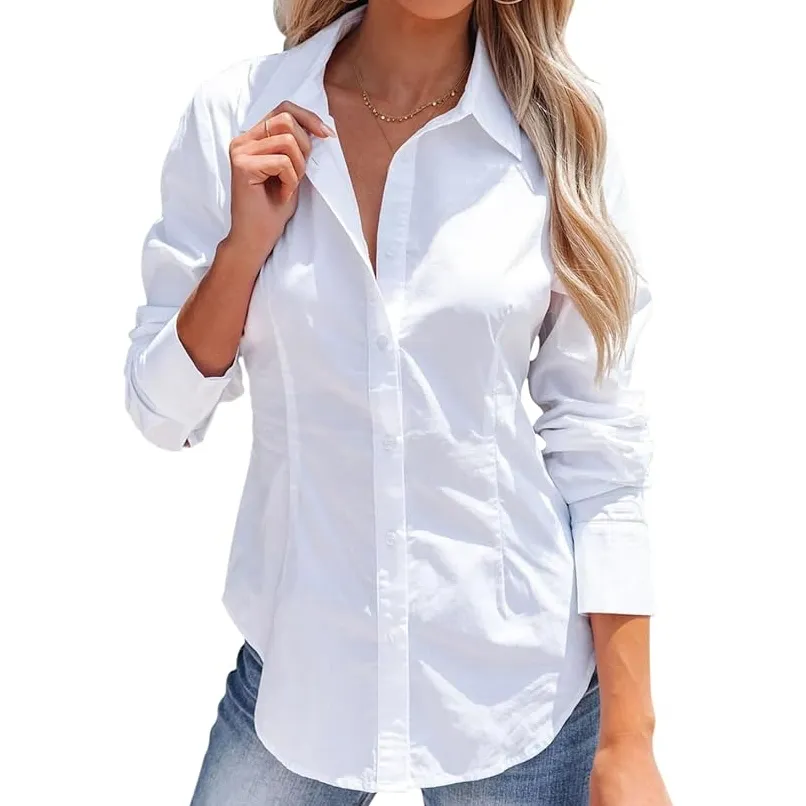
I cannot tell you how many outfits this one shirt has saved me from.
It’s the piece I reach for when I have nothing to wear — and somehow it always works. Tucked into trousers, knotted over a skirt, open over a tank.
I’ve gotten more wear out of a good white button-down than basically anything else I own.
The thing people get wrong: they buy the fitted version. Don’t. You want something slightly relaxed, maybe a size up, cotton poplin or a linen blend.
The fitted one just looks like you’re going to a job interview.
How to Style It
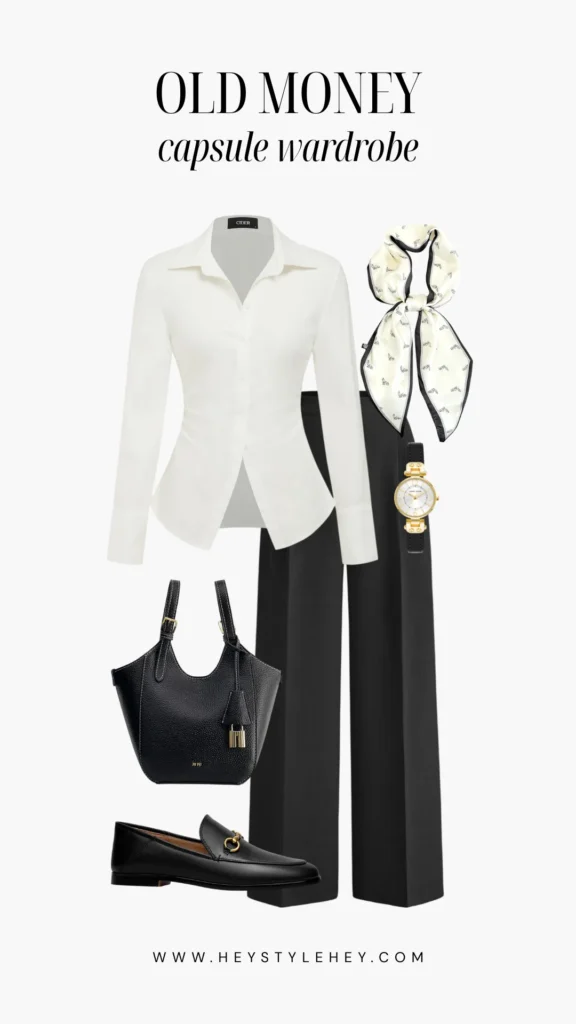
Black trousers, black loafers, black tote — everything matching on purpose, which sounds boring but it’s not.
The silk scarf was a last minute addition and it ended up being the detail that made the whole thing. Sometimes that’s how it goes.
02. Striped Breton Top
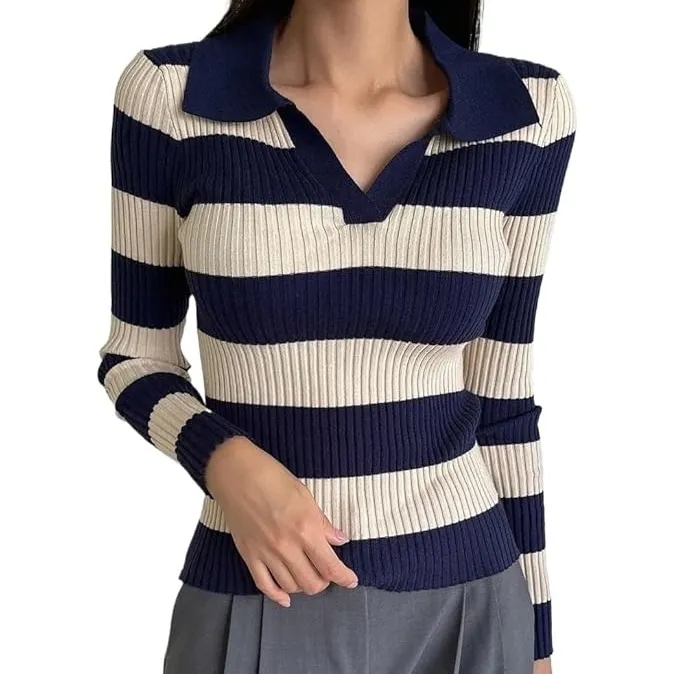
Every time I think I’m over stripes I put this on and remember why I keep buying them.
The Breton — navy and white, classic horizontal — has been around forever and still looks current. Something about the casual-but-pulled-together balance.
It never looks like you tried too hard, which for old money style is basically the whole point.
Fit matters a lot here. It should skim, not cling. A little slouch is actually better. I’ve seen the tight fitted versions on people and it just reads different — off somehow.
How to Style It
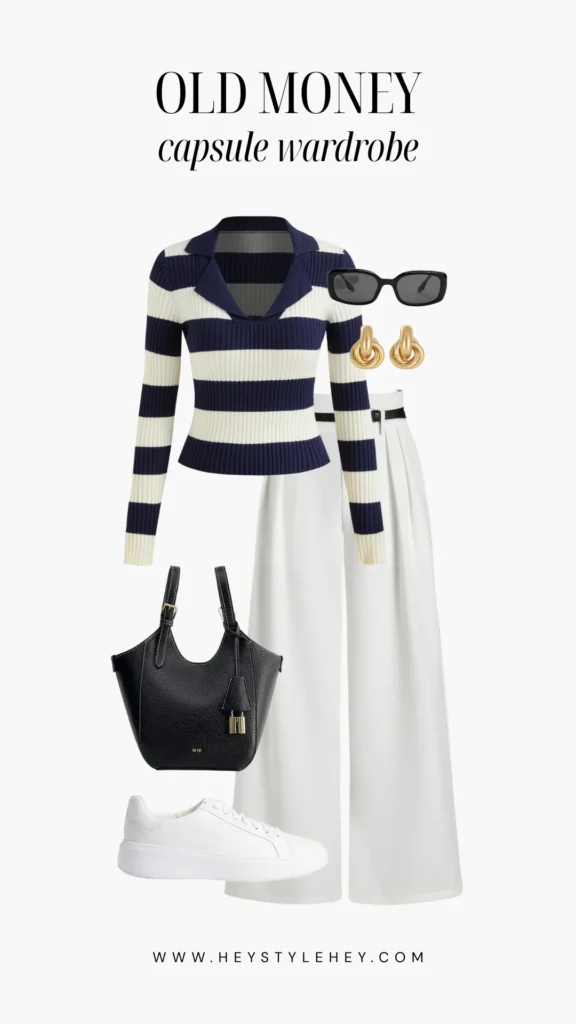
I didn’t expect this combination to work as well as it did honestly.
The Breton top with cream wide leg trousers felt a little safe in my head but when I actually put it together it looked really good — like genuinely good in a way I wasn’t prepared for.
White sneakers instead of loafers because I wanted it to feel like something you’d wear to brunch and not think about again.
Big gold earrings because the outfit needed it and I knew it.
03. Contrast Trim Top
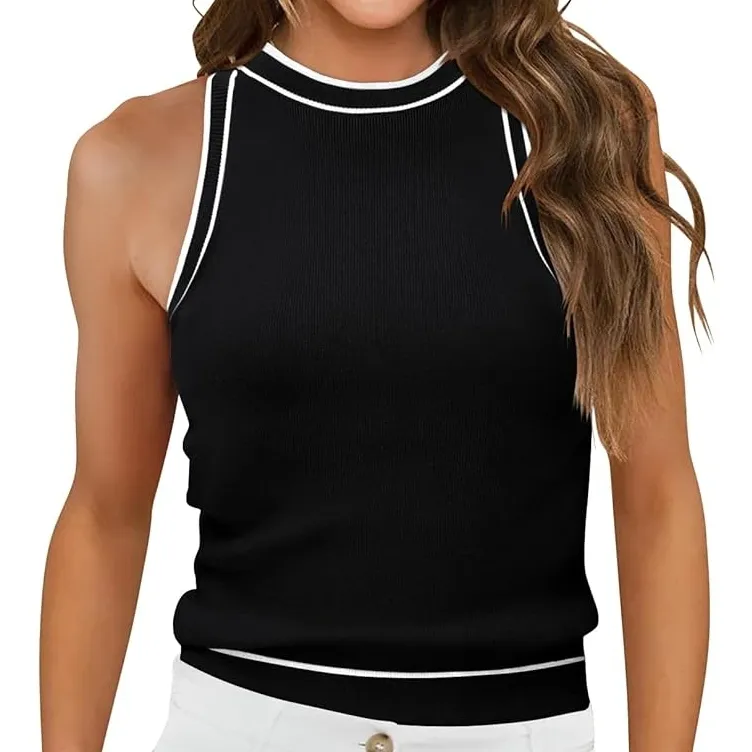
This is the piece I show people when they ask me what the old money aesthetic actually looks like in practice.
That contrast piping — navy or black on cream or white — makes an outfit look expensive in a way that’s weirdly hard to pin down.
I love a sleeveless version because it layers under blazers so cleanly, but the short-sleeve works too.
I’ll be honest — when I first bought this I thought it was a little costumey. Like I was trying too hard to do a “look.”
Then I wore it out and three people asked where it was from in the same day. So.
How to Style It
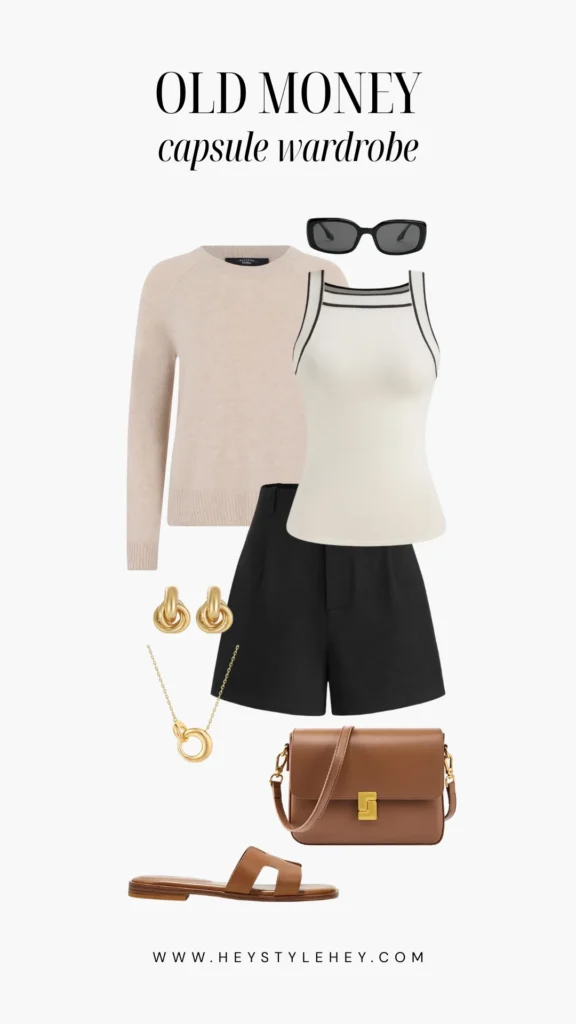
sweater | contrast trip top | shorts
sunglasses | earrings | necklace | crossbody | sandals
The sweater over the shoulders is something I resisted for a long time because it felt like a thing people do when they want to look like they’re not trying but they obviously are.
And then I tried it with this top and I got it. There’s a version of this that looks costume-y and a version that doesn’t and the difference is whether the rest of the outfit is simple enough.
Black shorts, tan sandals, tan bag — nothing competing. That’s when it works.
04. Silk Blouse
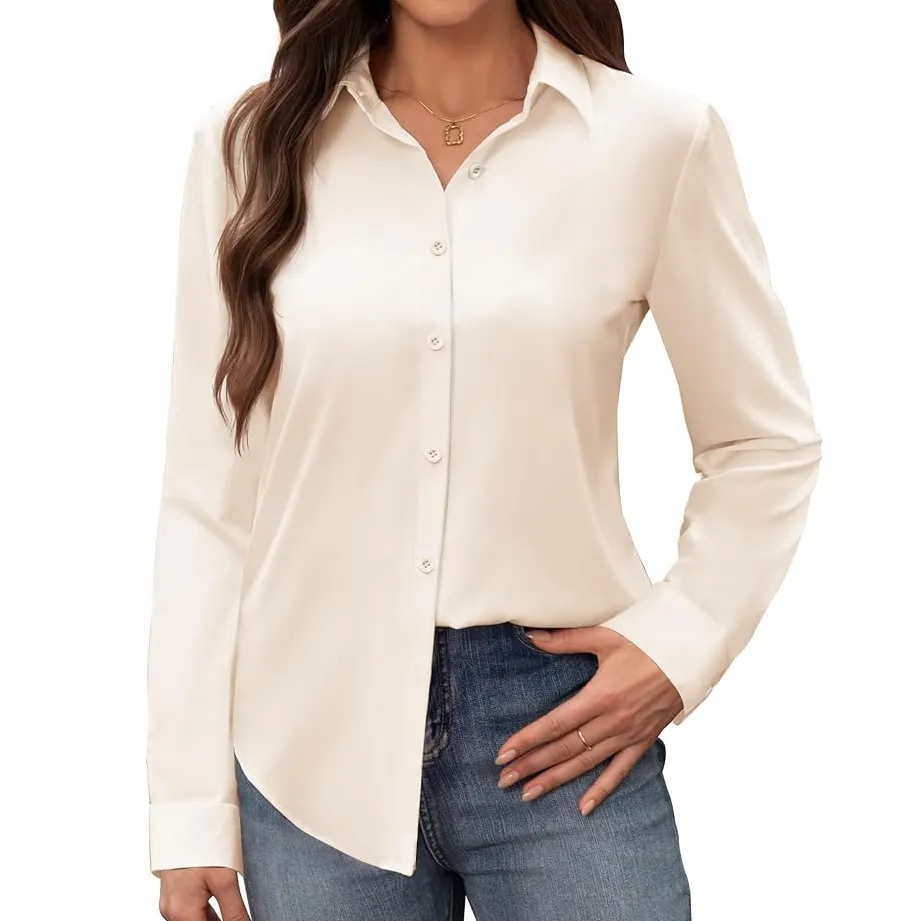
I put this in here because nothing else in this wardrobe drapes the way silk does.
A good quality satin gets you there without the price tag — same weight, same movement, same way it catches light. Cream or ivory, not stark white.
I kept coming back to it every time I was putting outfits together and that said enough.
How to Style It
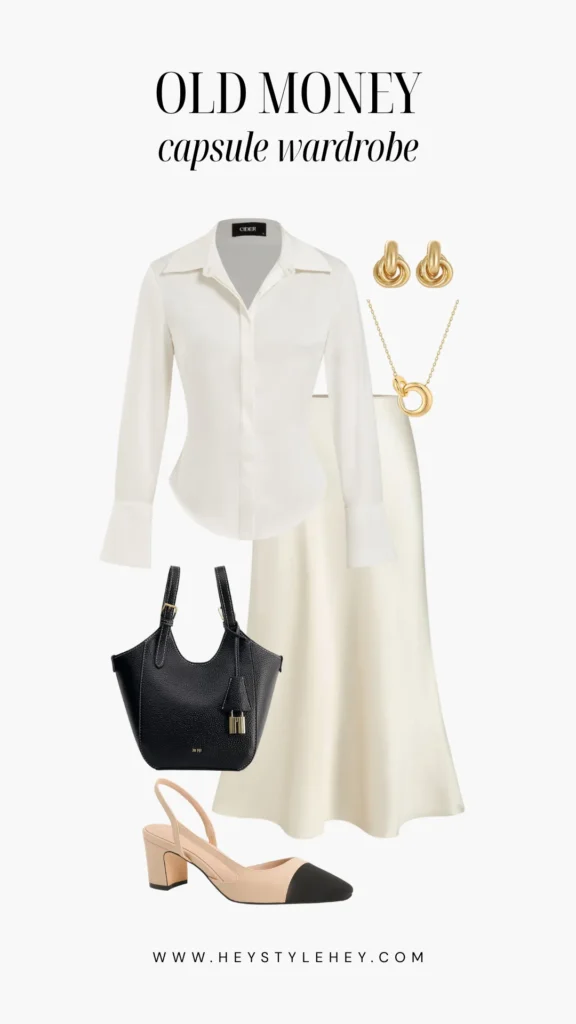
silk blouse | midi skirt
earrings | necklace | tote | pumps
I stared at this one for a while before I felt good about it. Cream blouse, cream skirt — I kept thinking it needed something and I kept adding things and taking them off.
The two-tone slingbacks were the last thing I tried and the moment I put them on I stopped. That small bit of black at the toe was enough.
I don’t know why it took me so long to get there but it always does with the simple ones.
05. Crewneck Sweater
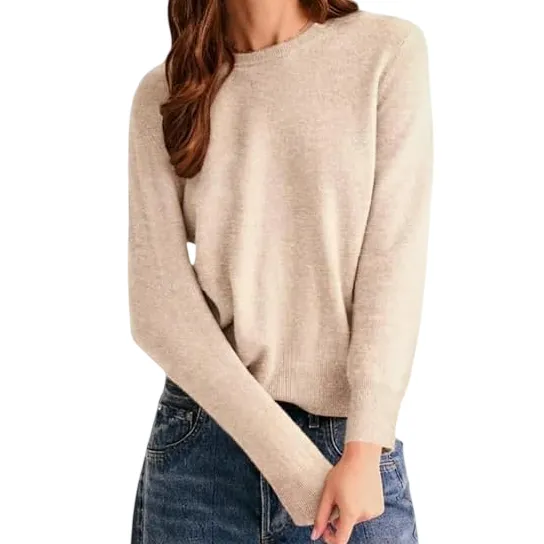
This one’s boring and I mean that as a compliment.
A crewneck in camel, navy, or cream isn’t exciting. That’s kind of the whole point. It’s the thing that makes every other piece easier to style on days when you just can’t think.
I’ve had mine in camel for two years and I reach for it more than anything flashier in my closet.
Wool or cashmere if you can swing it. Cotton blend if you can’t. True crewneck, slightly relaxed, nothing cropped.
The cropped versions mess up the proportions with most bottoms in this wardrobe — learned that the hard way.
How to Style It
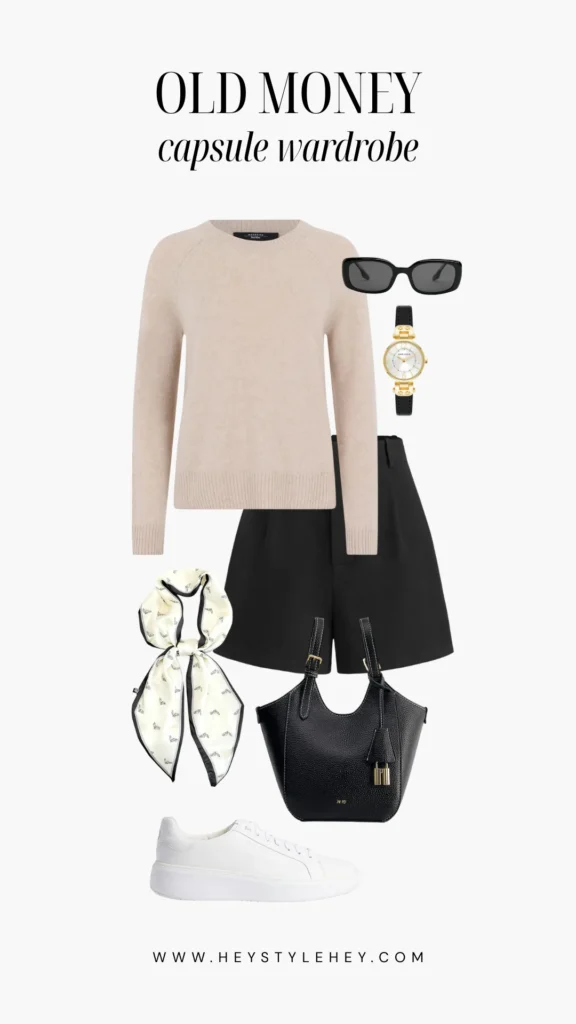
The silk scarf was the first thing I reached for with this one. Not around a bag, not in my hair — just loosely around the neck, that’s it.
There’s something about cream and black together that never needs much else and I think that’s why I keep going back to this combination.
06. Trench Coat
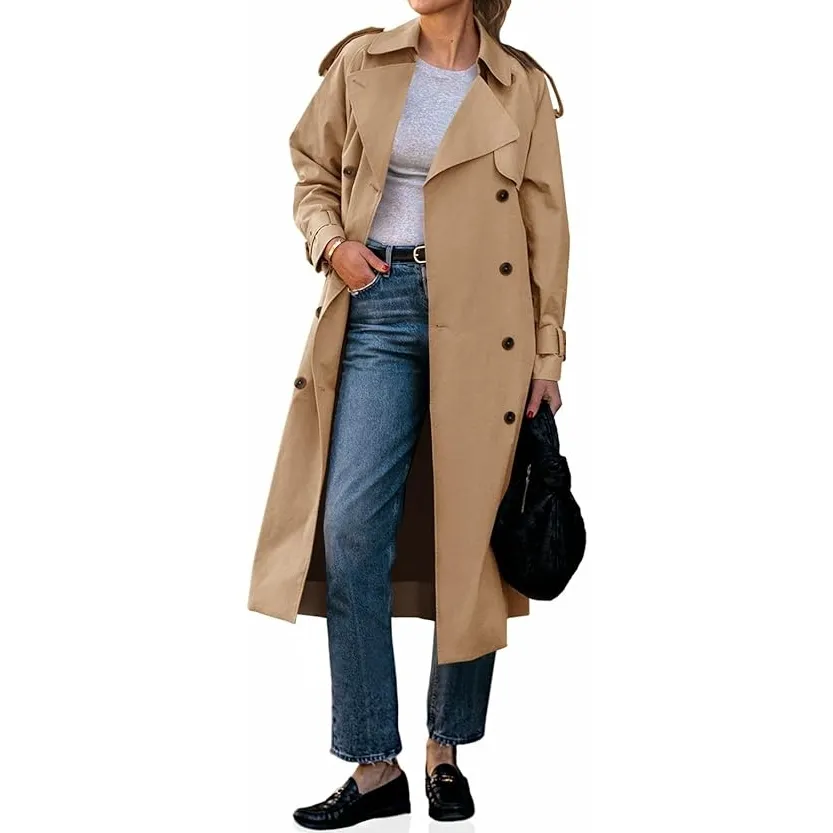
Okay I know everyone says this but the trench coat genuinely holds this whole old money capsule wardrobe together.
I’ve thrown it over pajama-adjacent outfits and still looked fine. Camel or khaki specifically — not black, not navy.
The warm tone is what makes it work with the rest of this palette. A black trench is a whole different vibe and it doesn’t do the same thing here.
Belt it. I wore mine open for about six months before a friend told me to belt it and I haven’t looked back since.
How to Style It
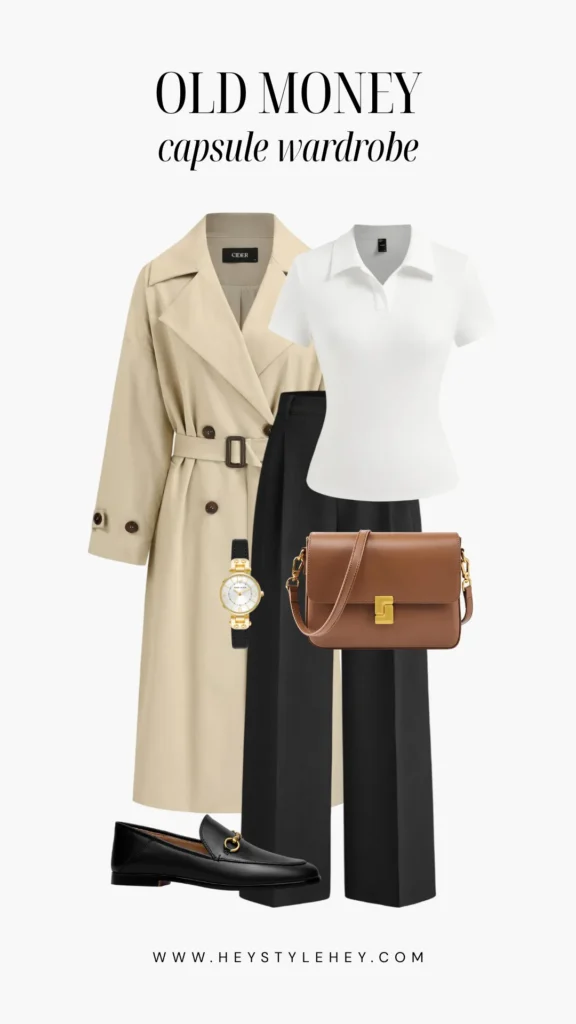
The tan bag was a deliberate choice and I’m really glad I went with it.
Everything else in this look is quite dark or neutral and the tan just brought something warmer in without me having to add another layer or change anything else.
That one decision and the whole thing felt done.
If you liked this, you’ll love this post too:
45+ Old Money Nails That Look Quietly Expensive (No Explanation Needed)
07. Blazer (Cream or White)
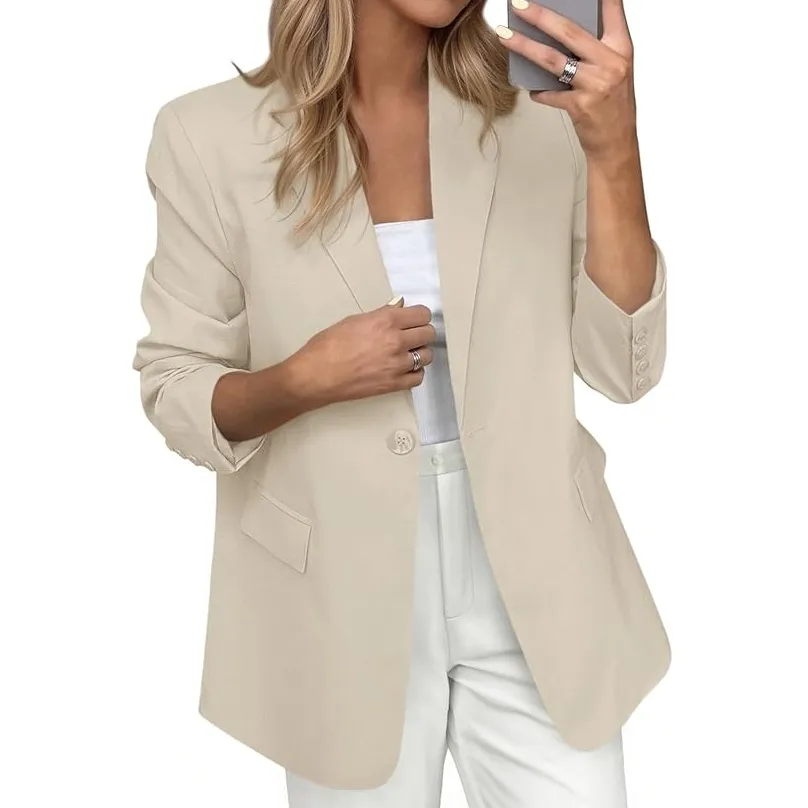
I put more outfits together around this blazer than anything else in this wardrobe.
Cream or white specifically — the lightness of it against everything else in this palette just keeps working.
One button, slightly relaxed through the shoulders. Wrong fit and it doesn’t work at all.
How to Style It
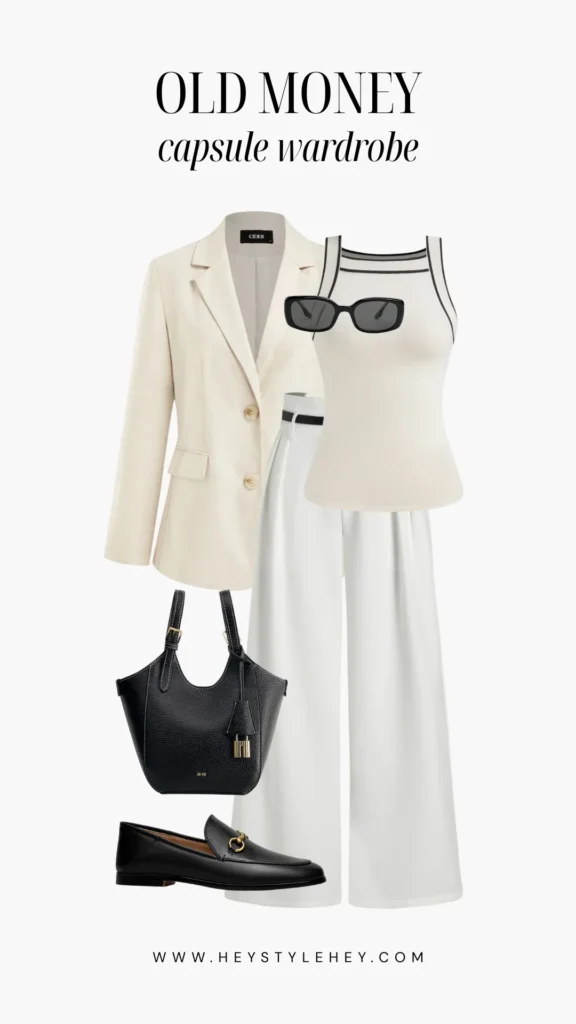
I wanted to go all the way into cream and white and just see what happened — and it turns out that’s kind of where this whole aesthetic lives anyway.
The contrast trim top underneath is the thing I keep thinking about with this one — it’s not obvious but without it the outfit wouldn’t have the same feeling.
Sunglasses on and I stopped looking.
08. White Trousers
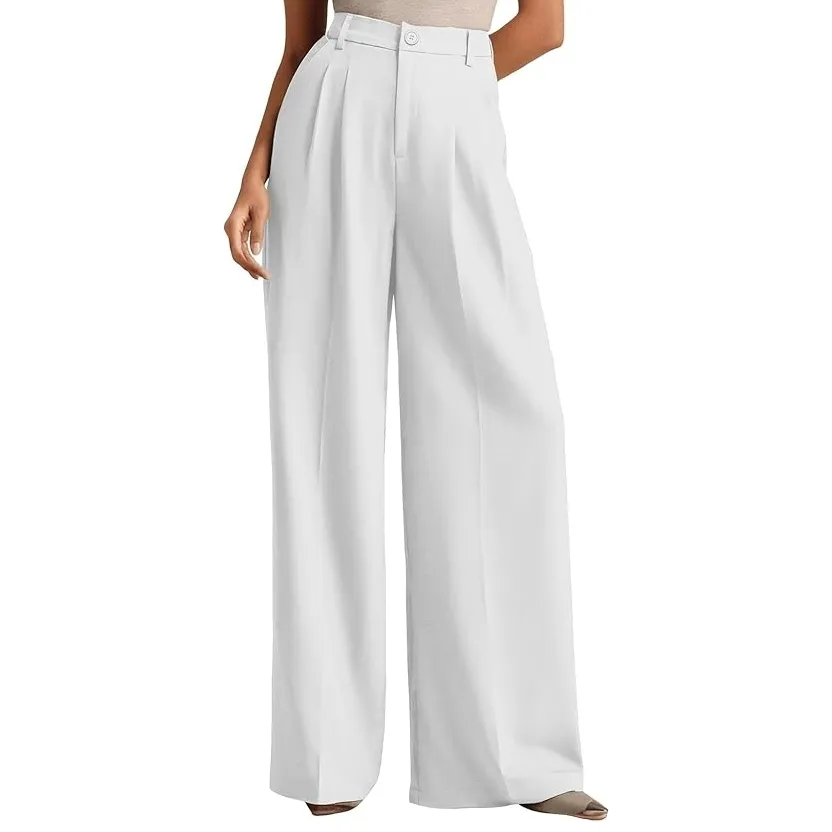
White trousers have this quality where everything above them suddenly looks more considered. It’s not something I fully understood until I started putting outfits together around them.
Clean white, wide leg or straight — the fabric needs weight to it, something that drapes. Anything with stretch changes the whole silhouette.
How to Style It
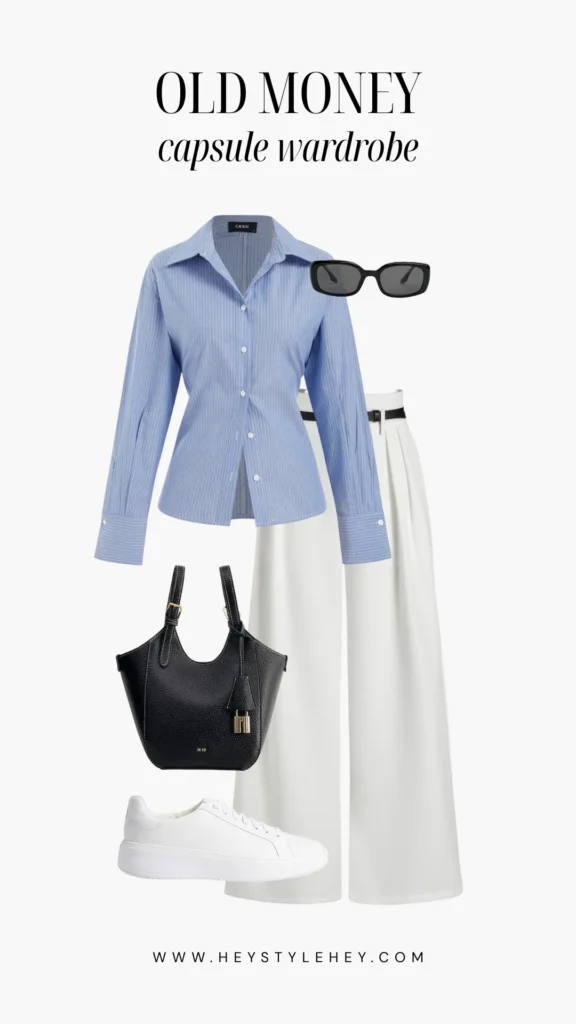
This one started with the blue stripe shirt and I just followed where it went.
Blue and white together has this quality that feels effortless without feeling like you didn’t try — and I wanted to keep that going through the whole outfit so everything else stayed light.
White trousers, white sneakers, black tote. It came together faster than almost anything else I put together and I wasn’t expecting that at all.
09. Black Trousers
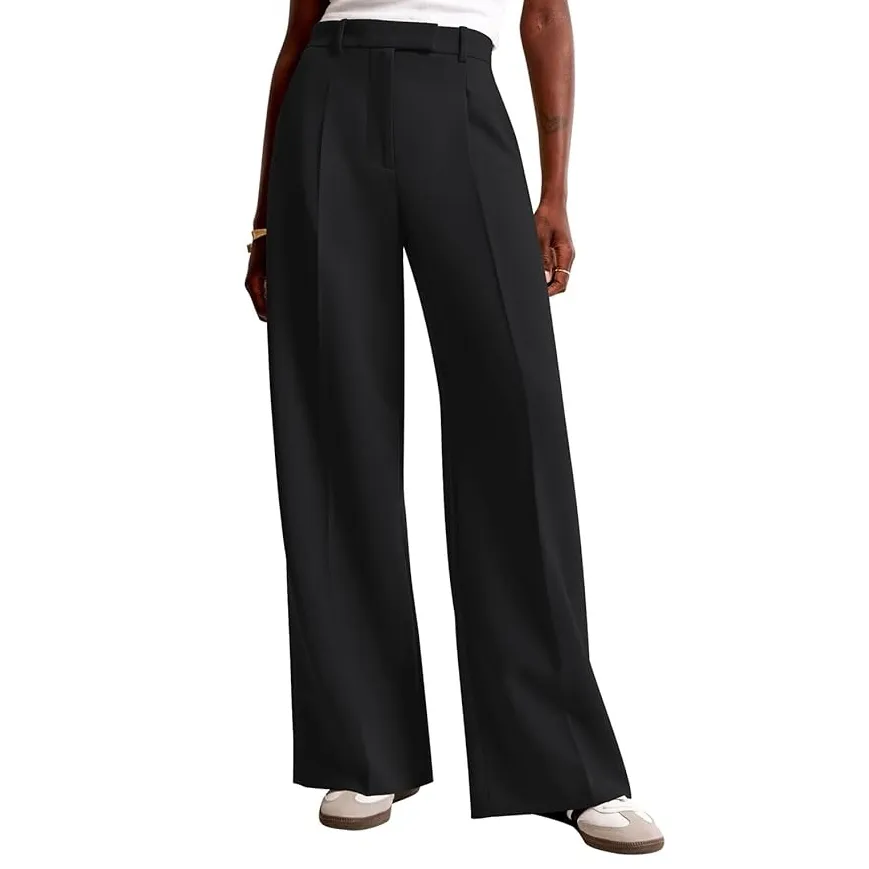
They’re the piece that makes this old money wardrobe work in real life and not just on a mood board. Four minutes to get dressed? Black trousers.
One thing I’d say plainly: the difference between cheap black trousers and good ones is really visible. The fabric shows immediately. More than almost anything else in this wardrobe.
How to Style It
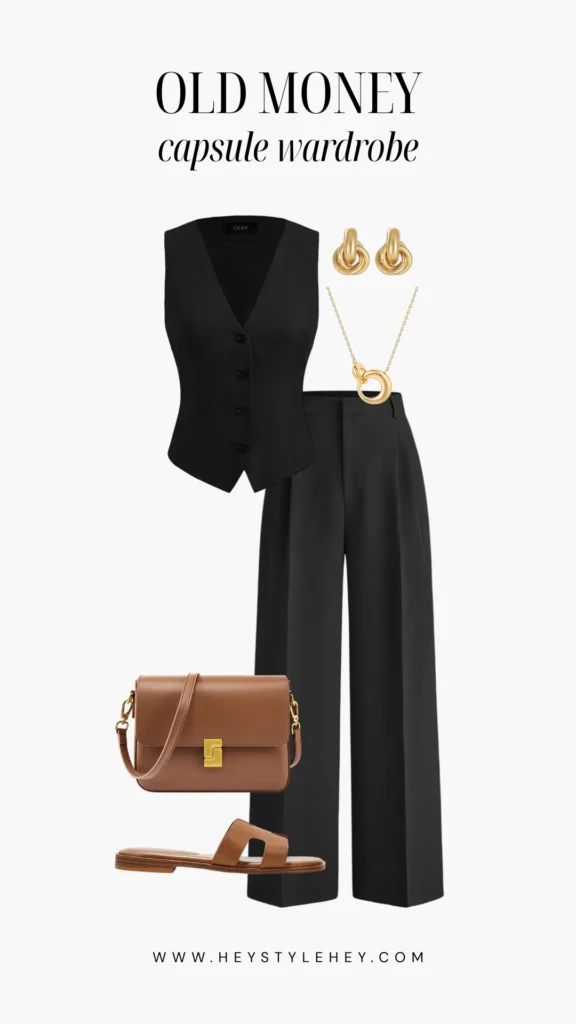
The vest without a shirt underneath was the decision I kept going back and forth on — and then I just committed to it. It reads more intentional that way, less like you forgot a layer.
Gold jewelry stacked, tan bag and sandals against all the black. The warmth of the tan in an all-black outfit was something I didn’t see coming.L
10. Cream/Ivory Slip Midi Skirt
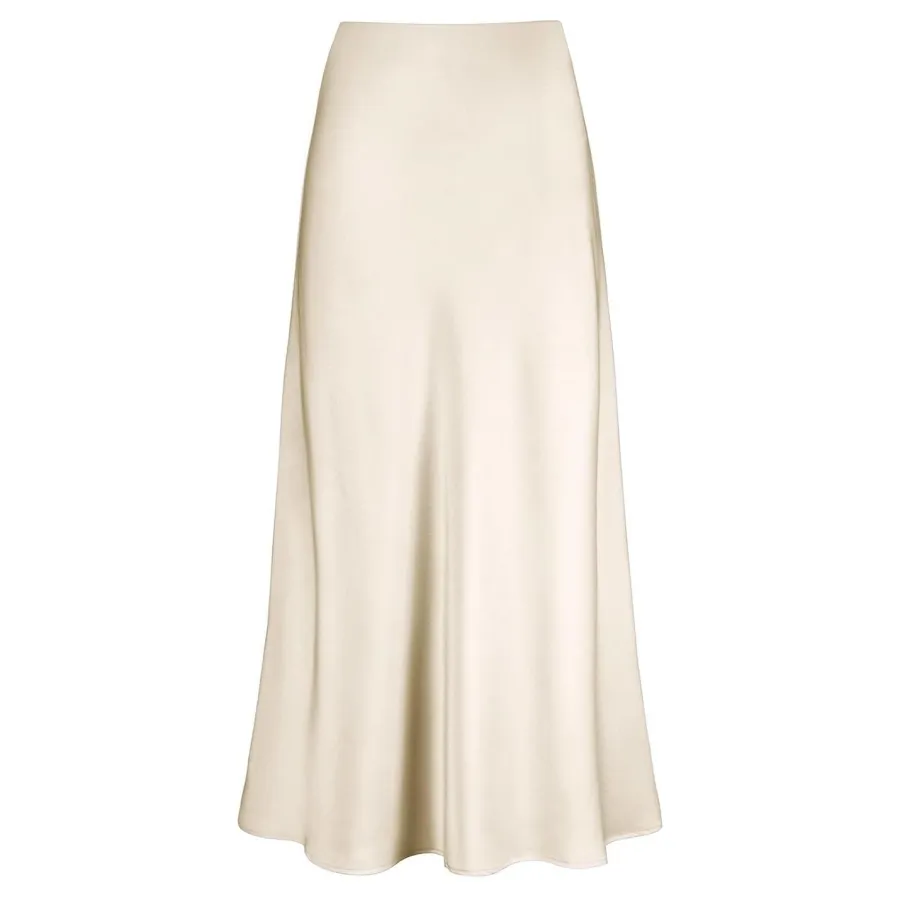
A slip skirt does something that other skirts don’t — the movement changes the whole feeling of the outfit.
I kept coming back to cream and ivory specifically because of how it reads against the other pieces in this wardrobe.
Mid-calf length, fluid satin. If it holds its shape on the hanger it’s the wrong one.
How to Style It
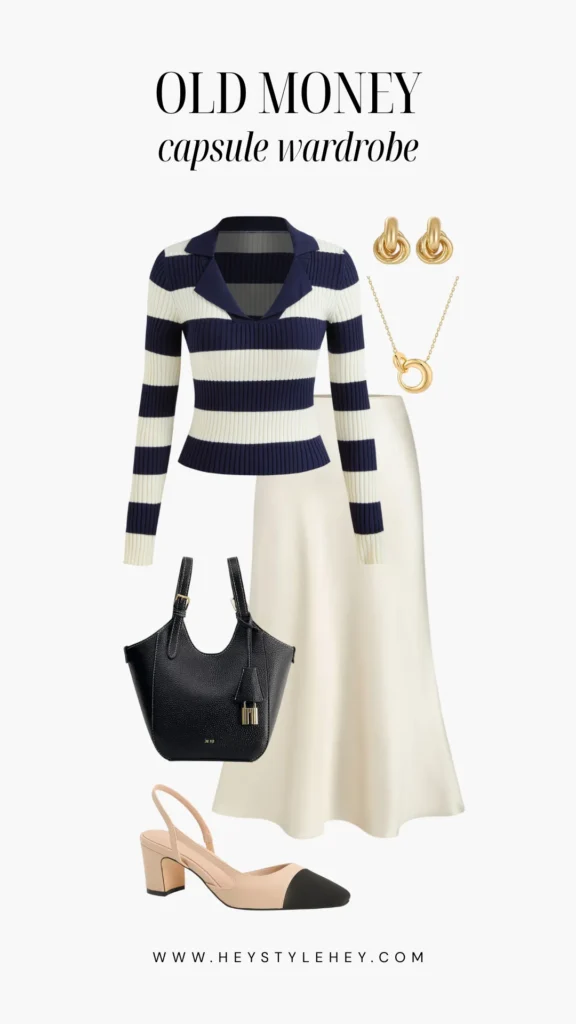
I wasn’t sure the Breton top would work with a slip skirt — they feel like they live in completely different worlds.
But the two-tone slingbacks pulled the whole thing together in a way I didn’t expect. The navy from the Breton, the cream of the skirt, that little bit of black at the toe.
It just worked and I couldn’t have told you it would before I tried it.
11. Black Knit Dress
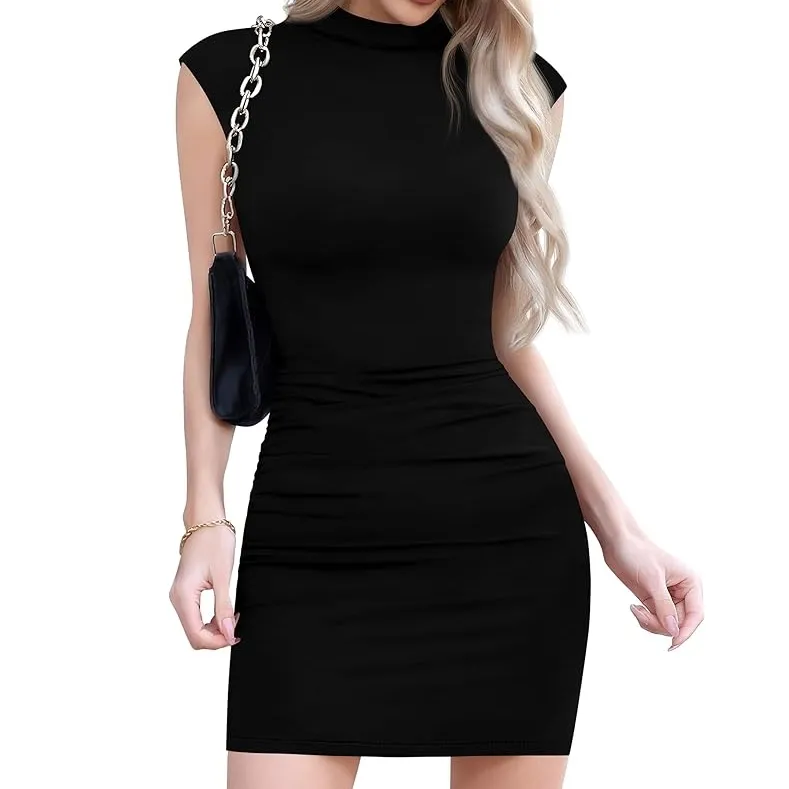
This one does more than it looks like it’s going to.
A black knit dress reads simple on a hanger but it layers in a way most dresses don’t. Structure without being stiff, enough weight to hold its shape.
I kept reaching for it when I was putting this wardrobe together.
How to Style It
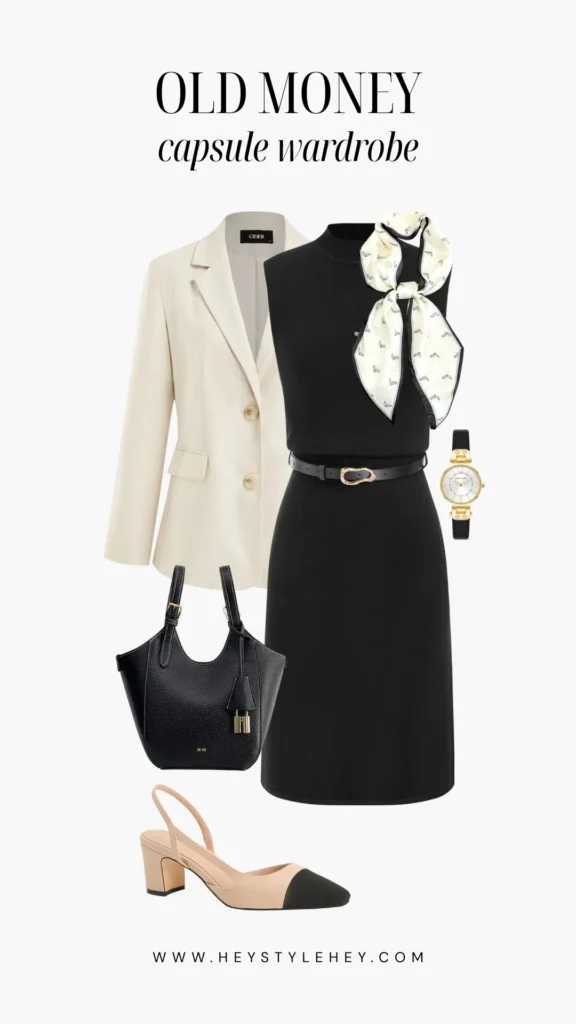
The scarf and the belt at the same time sounds like too much but it’s really not — the belt does one thing, the scarf does another, and the cream blazer over everything keeps it from going anywhere it shouldn’t.
I’ve been thinking about this one since I put it together. A lot of pieces, none of them loud.
12. White Linen Dress
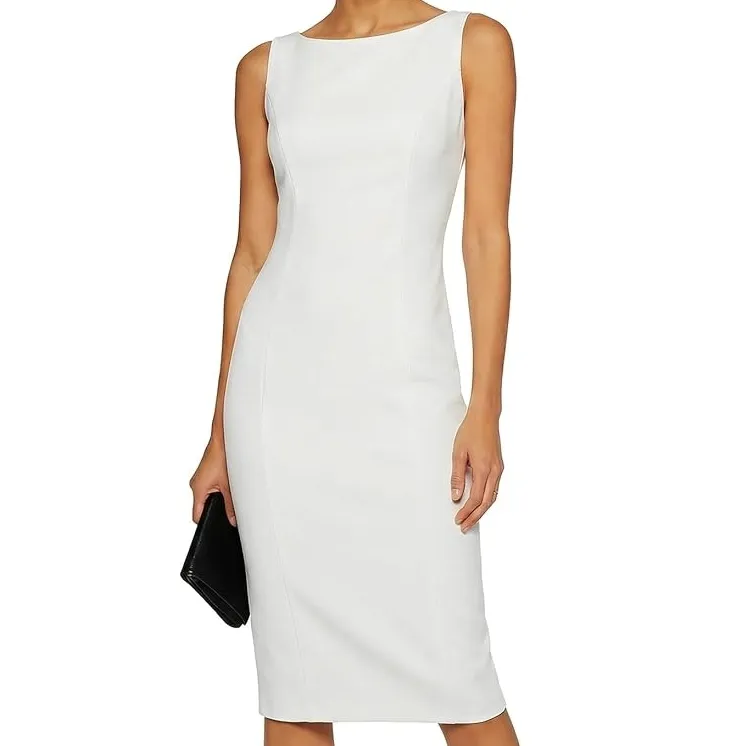
Honestly I almost didn’t put this in here because it felt too obvious.
But linen has an ease to it that other fabrics don’t — relaxed without looking like you gave up. Simple silhouette, nothing complicated.
Works on its own or with a sweater draped over the shoulders and I liked it both ways when I was putting this together.
How to Style It
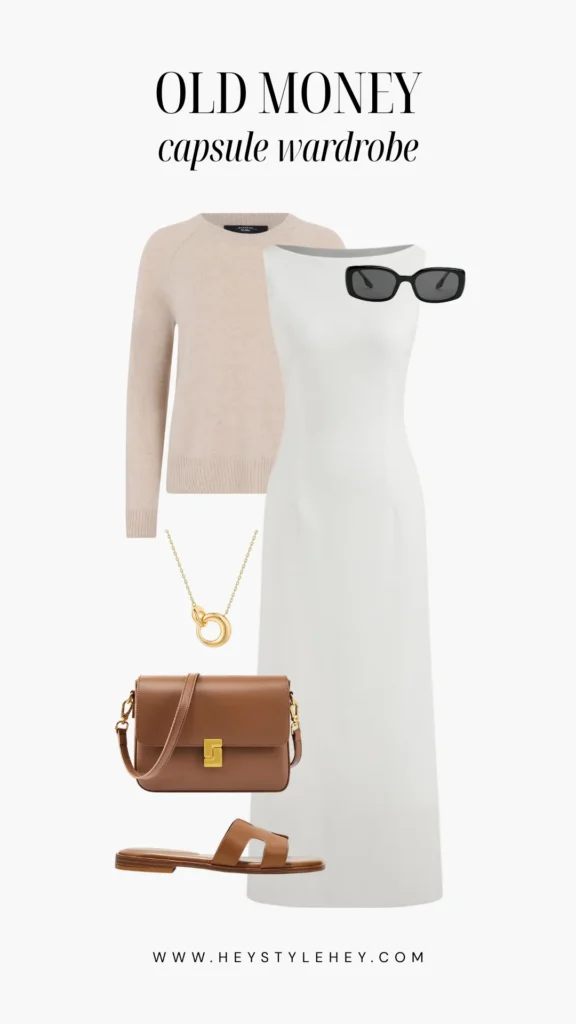
I draped the cream sweater over the shoulders here — loosely, same way I always do it. White and cream together with the tan bag and sandals felt warmer than I expected and I liked that.
I didn’t want to add anything after that and I didn’t.
13. Loafers
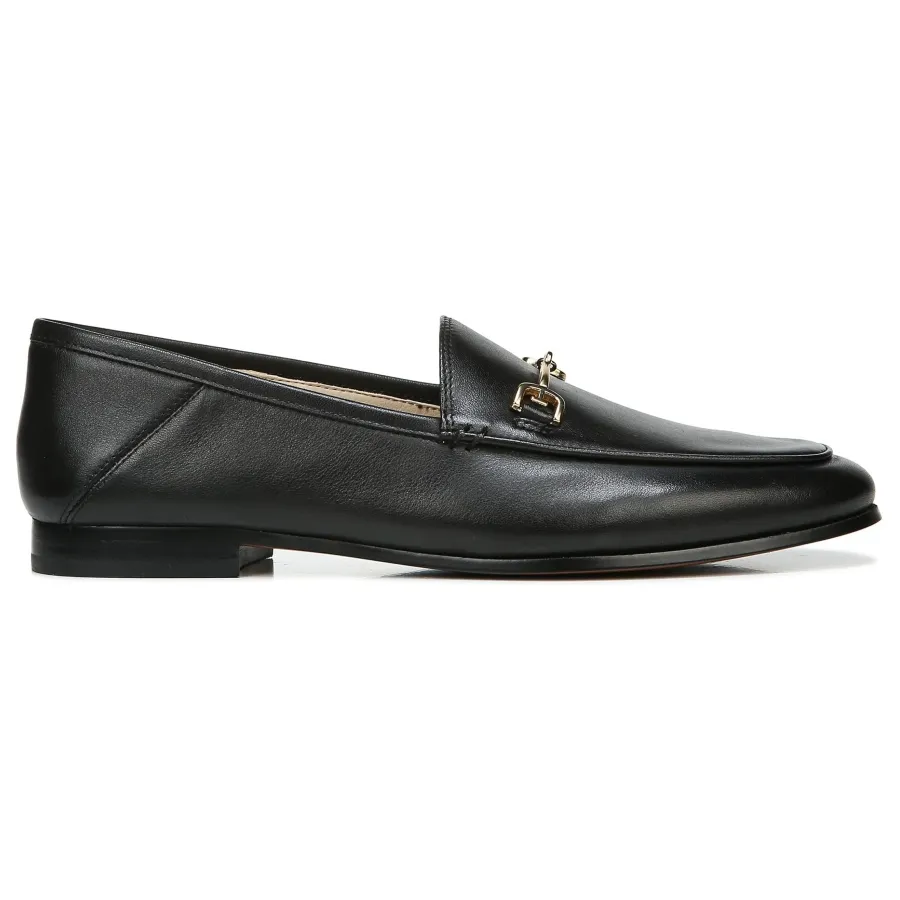
I’ve tried to make other shoes work with this wardrobe. Ballet flats, clean sneakers, low block heels. I keep coming back to loafers.
They go with everything in this list. Enough polish without being formal.
And comfortable — which I’ve learned actually matters when you’re trying to build a wardrobe you wear every day and not just save for good days.
Leather or leather-look. Brown, black, or burgundy. Classic cut, minimal hardware. I have mine in tan.
How to Style It
Every outfit I put together for this wardrobe ended up with loafers. I didn’t plan it that way — it just kept being the right answer.
There’s something about a shoe that doesn’t announce itself that works perfectly with everything else going on here.
14. Structured Tote
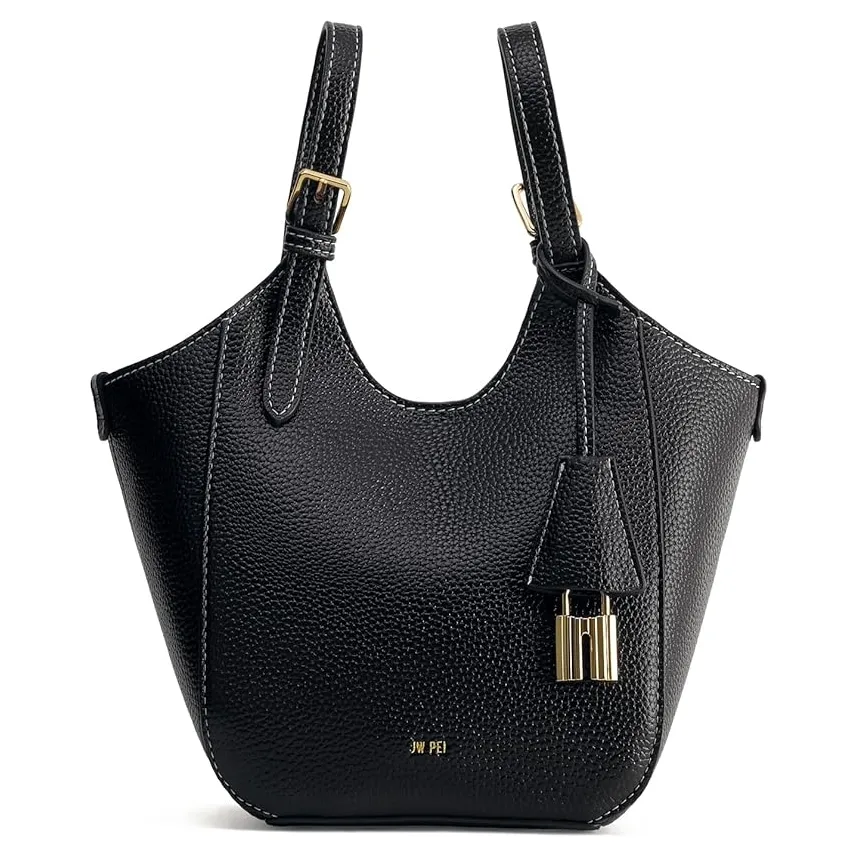
You don’t notice this bag when it’s there. You notice it when it’s not.
A structured tote in leather or quality leather-look — top handles, clean lines, no logos, minimal hardware. Big enough to actually use.
How to Style It
I went back and forth between the black tote and the tan crossbody on a lot of these.
Which one I landed on changed the whole mood — the black tote pulls things together more sharply, the tan bag softens everything and brings warmth in.
I ended up reaching for both more than I expected when I started putting this together.
15. Gold Earrings
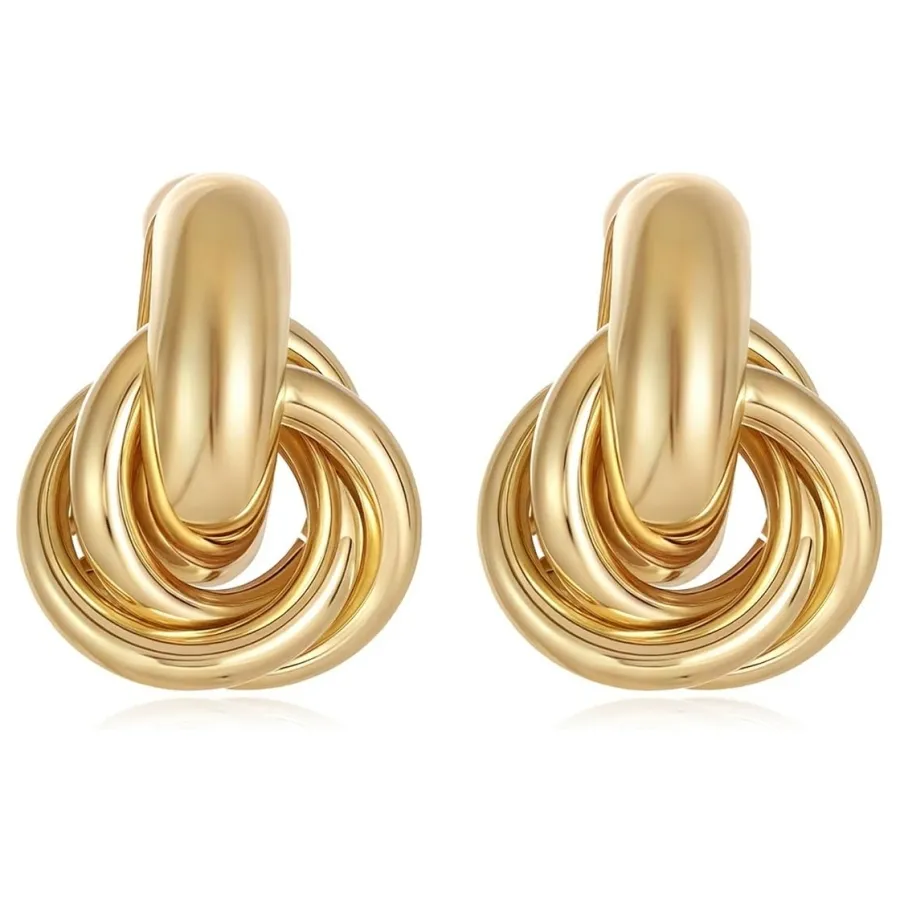
Last thing on, first thing people notice.
Not tiny, not big — somewhere in the middle. A simple gold hoop or a small stud with actual weight to it.
Old money jewelry doesn’t announce itself. It’s there, it looks right, you couldn’t really describe it afterward.
I’ve tried silver in this wardrobe and it just doesn’t sit the same way — gold works with the whole palette, silver pulls against it somehow.
How to Style It
I added these last to almost every outfit and every time it was the same — something that felt like almost-done suddenly felt finished.
15 pieces, that’s the whole old money capsule wardrobe idea.
Pin this for later — you’ll want to come back to it.
contrast trip top | polo shirt | button-up | striped breton top | silk blouse
trench coat | white dress | white trousers | black trousers | black dress | tailored vest | tailored shorts
blazer | crewneck sweater | midi skirt
structured tote | crossbody bag | sunglasses | belt | watch | scarf | earrings | necklace
basic pumps | loafers | sandals | sneakers