Okay so I’ve been deep in salon Pinterest boards for weeks now, and the fall 2026 hair color trends that keep showing up everywhere have a very specific mood.
Everyone’s calling it “quiet luxury” hair, which, sure, fine, but every colorist I follow keeps reaching for the same word to actually describe it: expensive.
The kind where someone asks what shampoo you use, not who did your color.
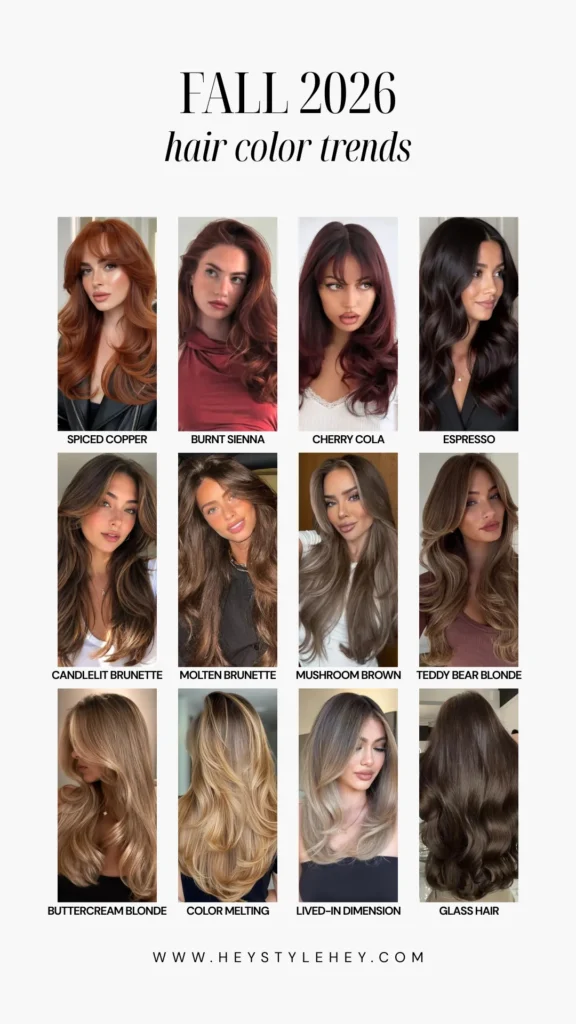
There’s thirteen of these I want to get into — what each one actually looks like, and what I think of it.
What’s Trending in Fall Hair Right Now
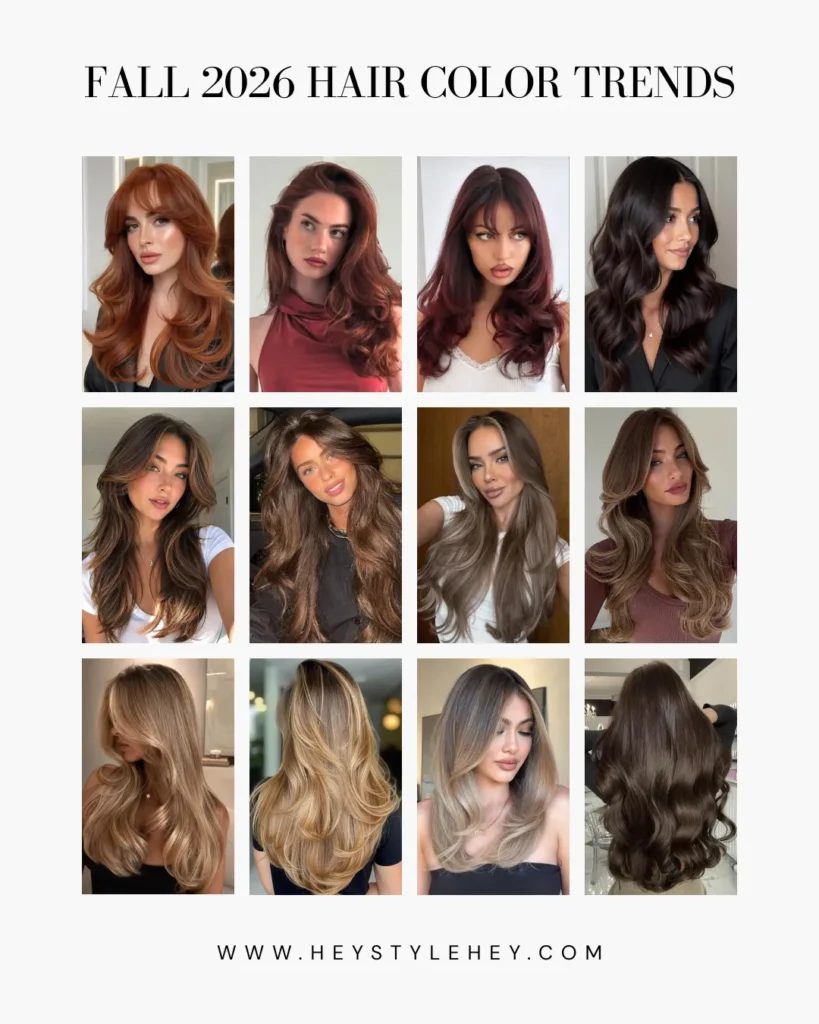
Basically, everything I’m seeing is getting warmer and deeper this season — reds, brunettes, blondes, all of it.
We’re a long way from the icy, ultra-cool tones from a few years back. Copper’s gone spicier, brunettes got richer and more layered, blondes went almost entirely golden.
And the “quiet luxury” thing, as far as I can tell, isn’t really about which color you pick — it’s about how it’s done.
The technique and the finish end up mattering just as much as the actual formula.
Starting with the reds.
1. Spiced Copper
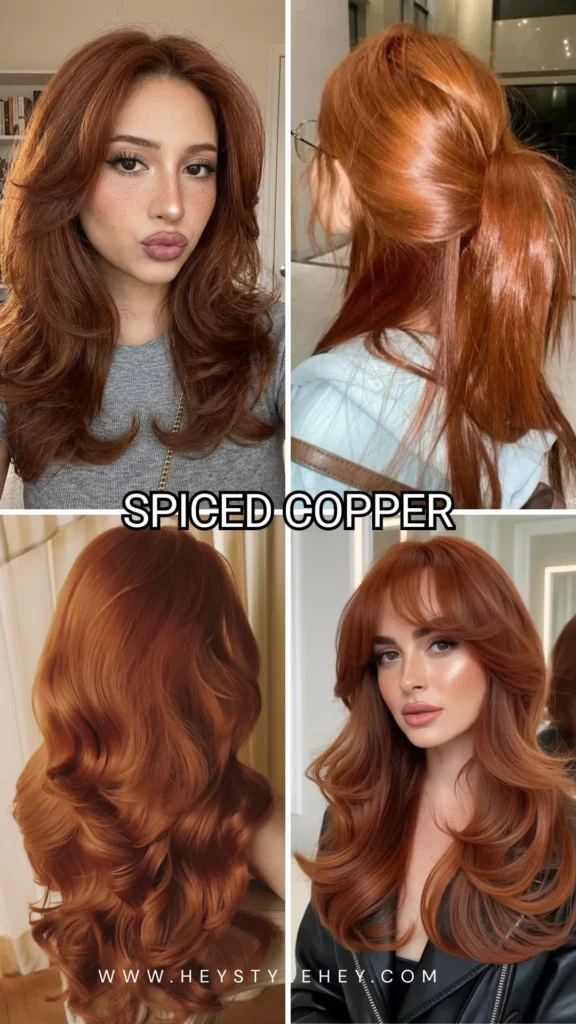
This is copper, but pushed deeper and dirtier than the bright, clean copper you’ve seen the last few years.
The base is still that orange-red copper everyone knows, but cinnamon and nutmeg tones get worked through it, so instead of looking like a shiny new penny, it looks more like a penny that’s been sitting in a drawer for a decade.
It comes in two real versions. A lighter, subtler take that’s barely a step from your natural color, and a deeper, more saturated version that’s a real statement. Both still read warm.
It’s an old color getting reformulated with a different spice rack, if I’m honest. That’s probably why it doesn’t feel like a fad to me.
2. Burnt Sienna
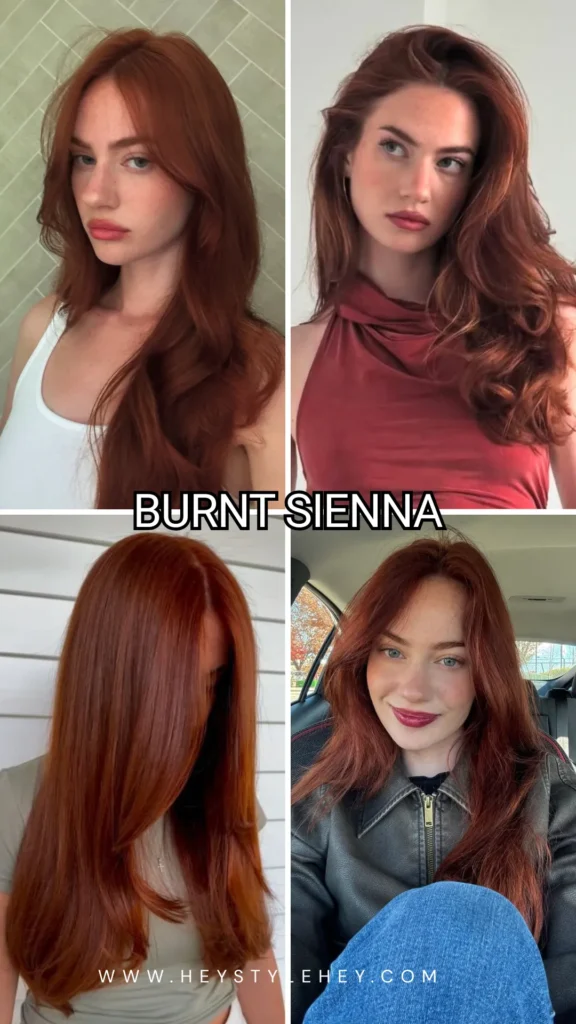
People throw this in the same bucket as copper, and I get why.
But it’s a different color once you look at them side by side — and it’s actually one of the better examples of how fall 2026 hair color trends are pushing reds into earthier territory.
Copper has shine to it, almost metallic. Burnt sienna doesn’t — it’s matte and earthy, closer to terra-cotta than anything you’d associate with a penny.
It sits warmer than a true auburn, dustier than copper, with none of the brightness either of those can have.
Someone called it “earthy” the first time I heard about it, and I rolled my eyes a little — sounded like a word stylists use to make brown sound interesting.
It’s not that, though. There’s a real rust-and-clay quality here copper doesn’t have.
For brunettes, this usually comes in through balayage rather than a full dye job — and don’t panic if it looks different the second you leave the salon, since fluorescent lighting does this color no favors.
3. Cherry Cola
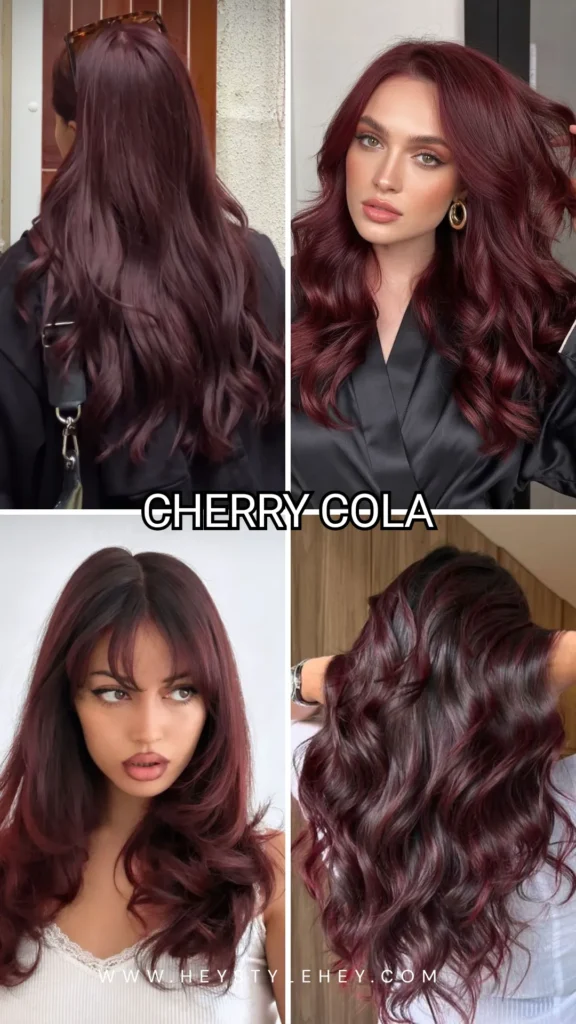
Totally different family from the two reds above.
Copper and burnt sienna both lean orange and rust. Cherry cola doesn’t — there’s a blue-violet undertone under the red, so it reads more like wine than fire.
What gets me about this color is it doesn’t commit to being red. In dim light, it’s just a really good dark brunette. Sun hits it, and suddenly there’s a burgundy shimmer that wasn’t there a second ago.
I can’t decide if that’s the best feature or the most annoying one. Depends entirely on whether you wanted your hair to surprise you twice a day.
This one also keeps resurfacing every couple of years under a new name, so it’s less a fall 2026 invention than a shade fashion keeps rediscovering.
If you’ve already got dark brown or black hair, you might not need bleach. A gloss alone can get you most of the way there.
4. Expensive Espresso
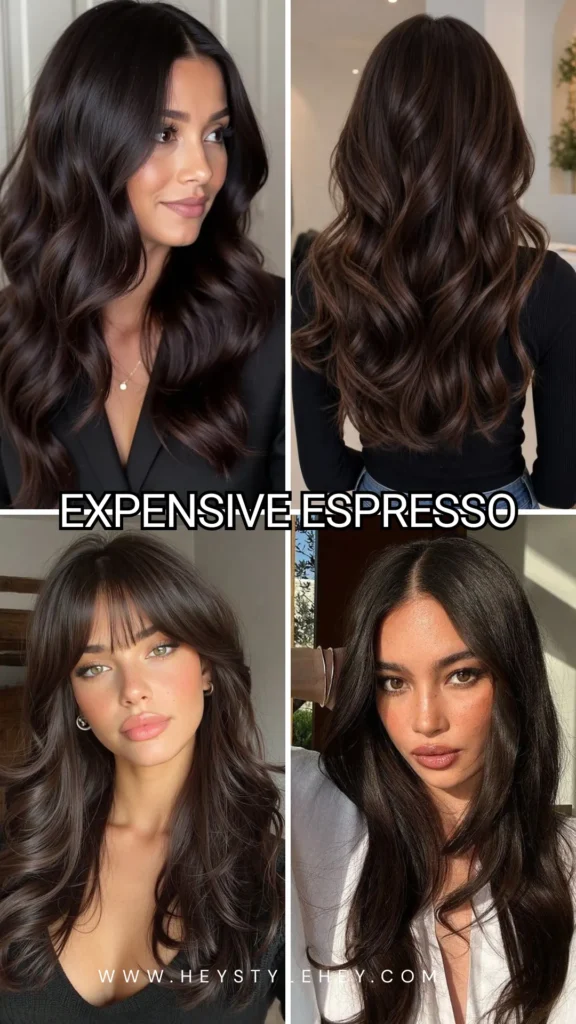
Zero gimmicks here, which is kind of the entire point.
Deep, almost-black brown, applied as one even tone instead of broken up with highlights — no red peeking through, no ash either, just straight cocoa all the way down.
What makes it work — and what makes it different from the flat, dull dark brown everyone’s had at some point — is shine doing all the work. A flat dark brown with no gloss just looks tired.
The same color glossed up catches light and creates depth without a single foil ever touching your head.
This one I trust to still look good a couple years from now. There’s no specific technique or undertone it’s chasing — just hair health, made visible.
5. Candlelit Brunette
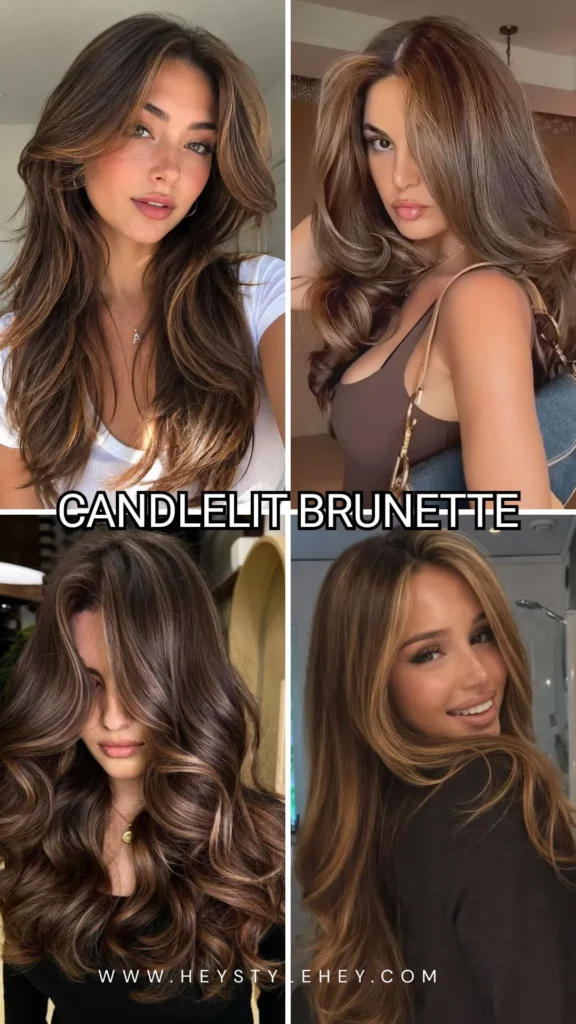
One or maybe two shades lighter than your natural base, with thin streaks of gold woven through — this is about as subtle as the brunettes get.
Usually it’s worked through the crown and the ends, not all over, so the front pieces by your face catch the most light. Like someone lit an actual candle behind your hair.
I’d point a nervous first-timer toward this one specifically.
It’s nearly impossible to mess up, and it barely moves your color. Yet everyone still notices and asks what’s different.
6. Molten Brunette
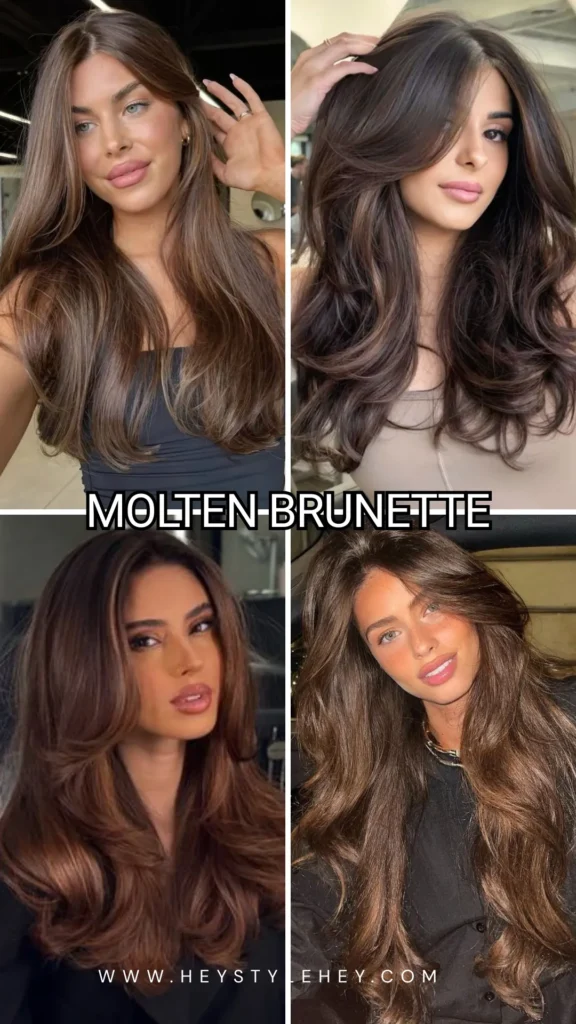
This one’s still chocolate, amber, and mocha layered together, same warm family as candlelit.
But it’s closer to hot fudge poured over ice cream than streaks of anything — the whole head reads as one rich, moving color instead of base-plus-highlights.
Candlelit keeps its gold visible as little streaks. Molten blends until you really can’t find the edges.
I find this one harder to describe than to recognize in person. Which usually means it’s harder to execute well, too.
A great molten brunette looks effortless. A mediocre one just looks like uneven brown.
If you liked this, you’ll love this post too:
Fall 2026 Hair Trends: 14 Cuts, Colors, and Styles I Can’t Stop Looking At
7. Mushroom Brown
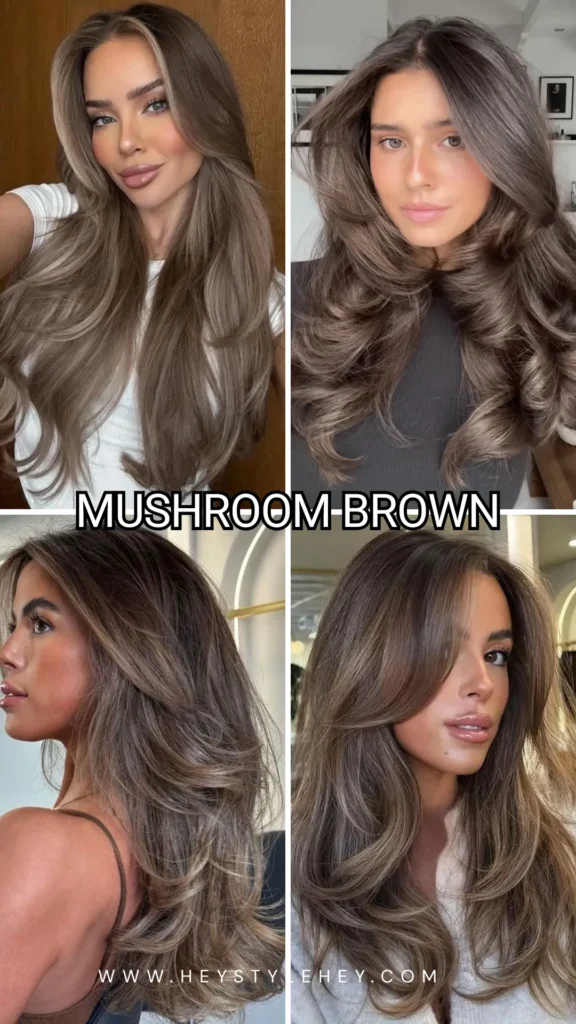
The one cool-toned color of the bunch, and that’s exactly why it stands out. Warmth just isn’t the point with this one. Everything else above leans gold, copper, amber.
Mushroom brown goes the other way — taupe, soft gray, neutral brown, somewhere earthy-but-cool.
I don’t think this one’s for everyone. If your undertones are neutral or olive, it does something flattering that warmer browns can’t — evening out redness instead of adding to it.
On warmer undertones, it can read flat or gray instead of intentional, so know which one you are first.
8. Teddy Bear Blonde
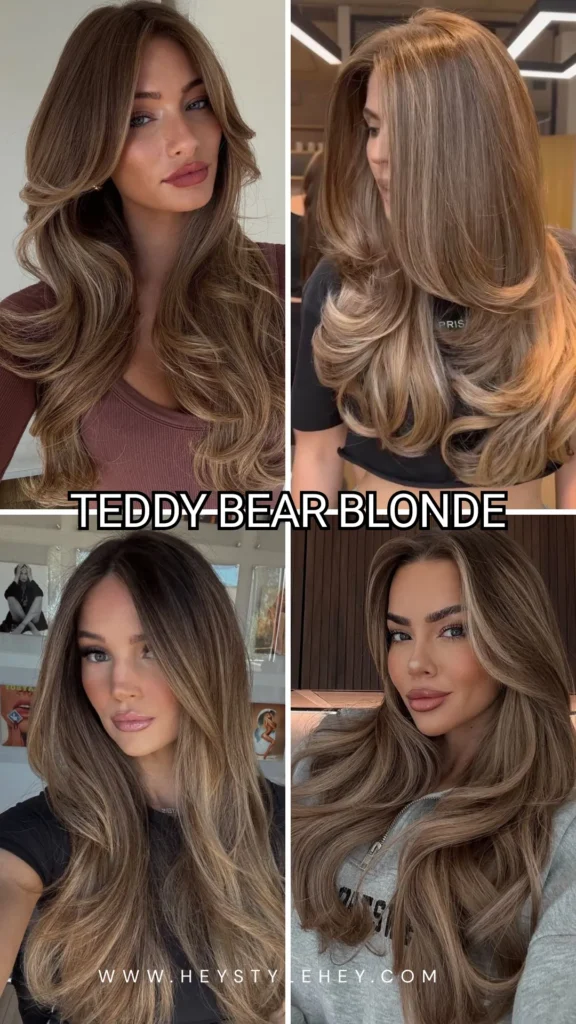
Caramel, honey, toffee, a little chocolate brown stacked together — the deepest and most layered of the blondes here.
Reads almost brunette in low light, unmistakably blonde the second the sun hits it.
Warm blondes have apparently overtaken cool blondes in actual salon bookings for the first time in years, and teddy bear blonde is the clearest version of that shift — about as far from icy platinum as blonde gets.
It needs multiple tones in the formula to get that stacked look, so this isn’t a single-process color. Worth knowing before you book it.
9. Buttercream Blonde
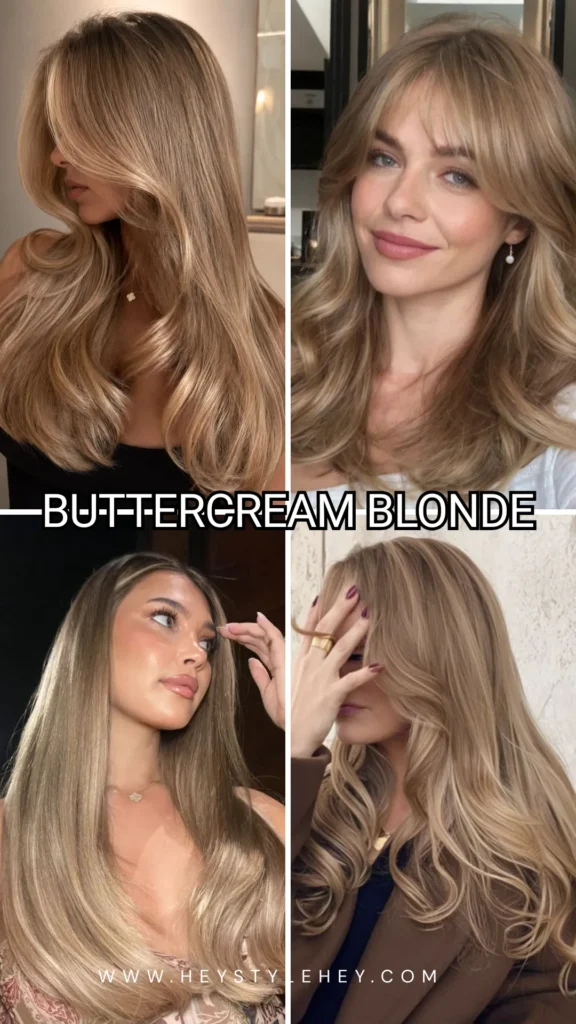
Lighter and creamier than teddy bear blonde, with way less brown mixed in. More golden glow, less depth. If teddy bear blonde is caramel and toffee, this is more like afternoon sun through a window.
It sidesteps the brassy-yellow problem golden blondes run into, and skips the root-touch-up demands platinum requires. I’ll admit there’s nothing especially striking about the color itself — it works because it’s easy.
10. Color Melting
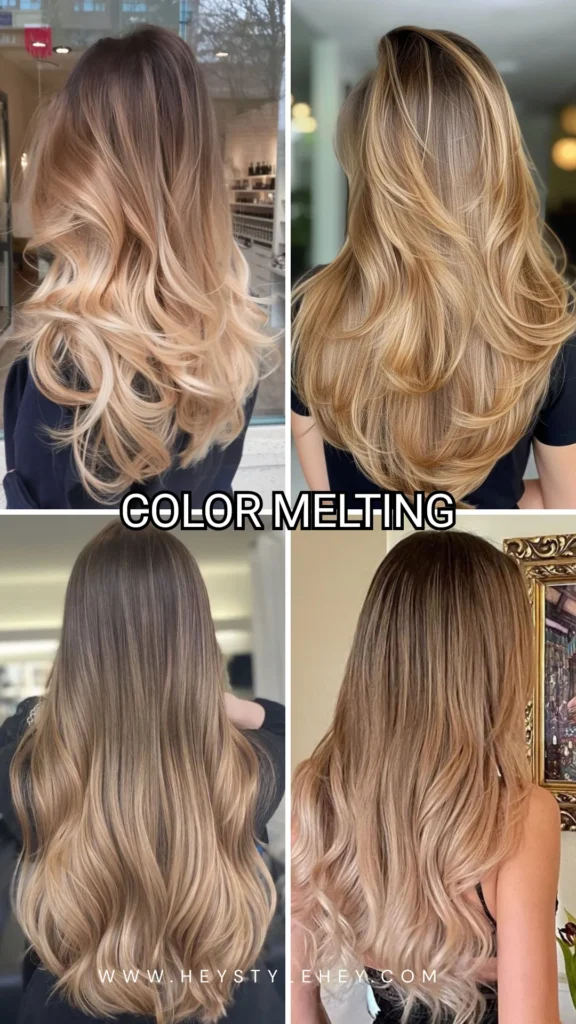
This one’s a technique more than a color, and probably the one doing the most heavy lifting out of everything on this page.
Color melting takes two or three shades and blends them so thoroughly you can’t point to where one ends and the next starts. Think watercolor bleeding into wet paper, no hard line anywhere.
From what I’m seeing, it’s quietly replacing the old chunky-highlight look almost everywhere.
As a method rather than a shade, it doesn’t really go out of style — it just gets applied to whatever’s trending next.
11. Lived-In Dimension
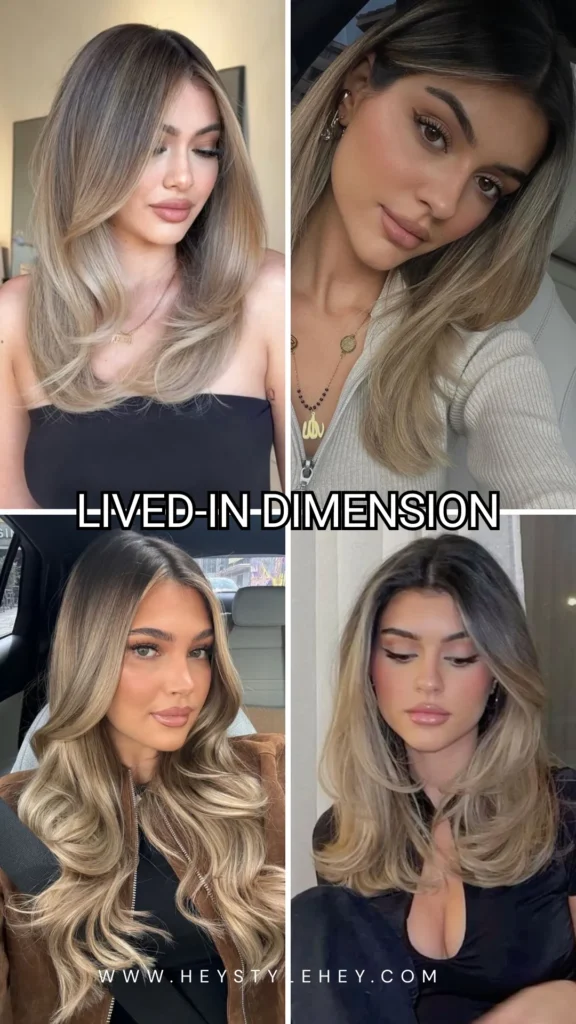
This isn’t one technique — it’s an umbrella covering several.
Root smudge, shadow root, root melt, root tap all chase the same basic goal, softening the line between your roots and whatever’s happening below them. But they’re not interchangeable.
Root smudge stays close to the scalp, a subtle gradient. Shadow root pulls a darker tone further down for visible contrast — moodier, more intentional-looking. Root tap is the lightest touch, barely darkening anything.
Honestly, it comes down to two things: how long you’re trying to stretch between salon visits, and whether you want that softer transition or actual visible contrast at the root. Different goals, different pick.
12. Glass Hair
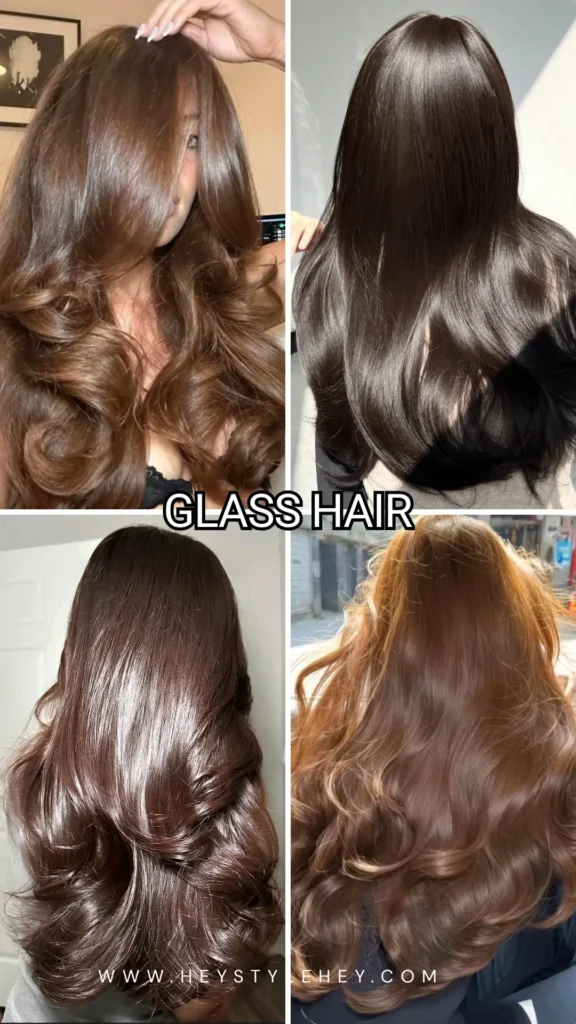
Technically this isn’t a color trend at all, but you can’t really talk about fall 2026 hair without it.
Glass hair is the finish — so smooth and reflective hair looks almost liquid, catching light the way actual glass would.
Nearly all the colors above depend on this finish to look right, more than people realize.
Expensive espresso without gloss just looks flat. Teddy bear blonde without it loses half its warmth.
None of that shine shows up in a screenshot the way the color does. But trust me, it’s doing just as much of the work — arguably more.
13. Almost Virgin
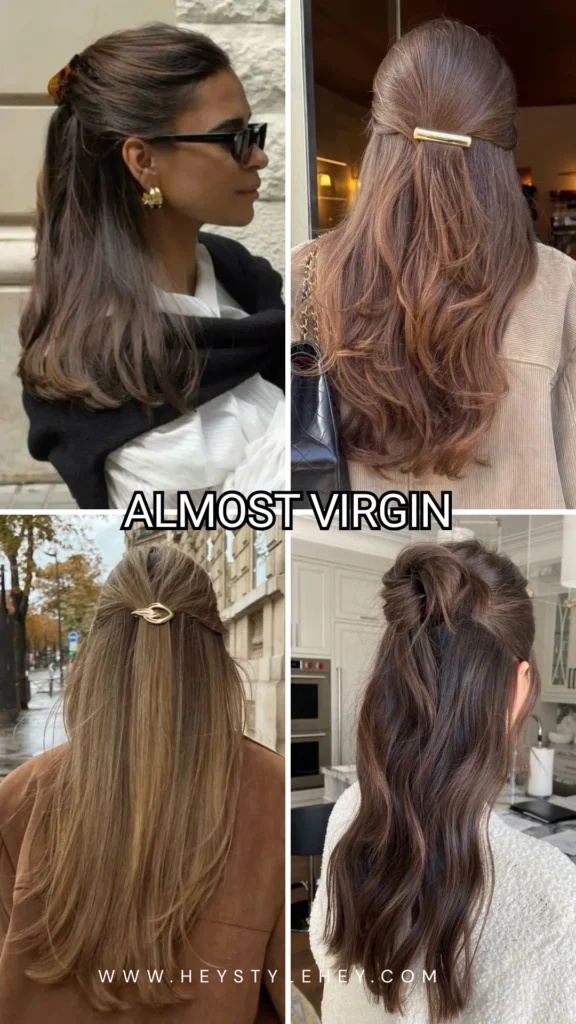
And then there’s the people doing none of the above.
Almost virgin hair means barely touching your natural color — maybe a clear gloss for shine, maybe the faintest babylights you’d need to squint to notice.
It’s quiet enough that it feels almost funny to include in a color trends roundup.
What gives me pause is that it photographs beautifully on people whose natural color was already doing a lot of work, and not everyone’s is.
Worth a real conversation with your colorist before assuming this is the zero-effort option it sounds like.
Sometimes “almost virgin” still means showing up for a gloss every six weeks to look this effortless.
More posts you’ll love
Reds got spicier, brunettes got deeper, blondes went golden — that’s the whole fall 2026 hair color trends list in one line. Even skipping color entirely isn’t quite the zero-effort move it sounds like.
If I had to book one, it’s expensive espresso. What are you leaning toward?